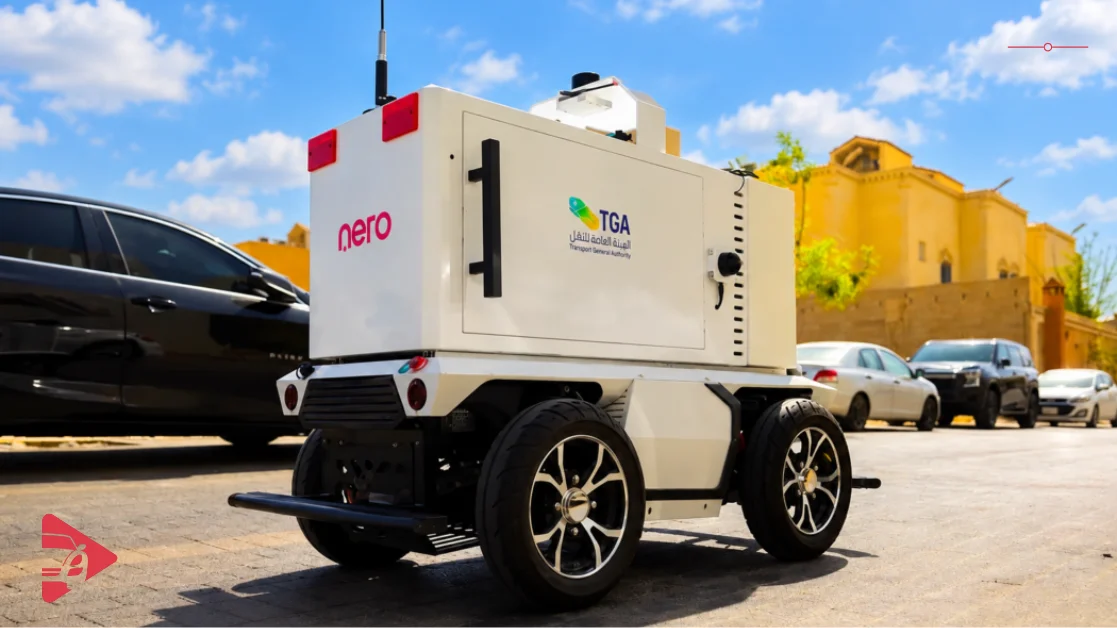
The Saudi Transport General Authority has launched a trial operation of the autonomous electric Nero vehicle to deliver orders without a driver in the Al Falah neighborhood of Riyadh, as part of an initiative aimed at testing new delivery solutions and improving delivery efficiency. The trial seeks to reduce delivery costs by up to 85%, while developing safety standards and user experience, and supporting the use of modern transportation technologies in the Kingdom.
The vehicle bears the logo of Saudi-based Nero, a company specializing in autonomous delivery solutions. It operates within a defined geographic area, independently transporting orders from stores to customers while its movements are remotely monitored from a specialized operations center.
The importance of the trial lies in testing the possibility of using autonomous vehicles in a direct daily service instead of limiting them to experimental applications, while evaluating operational efficiency and the controls required to use this technology in an urban environment.

Launching the Actual Operation of the Nero Vehicle and the Foundations of Innovation
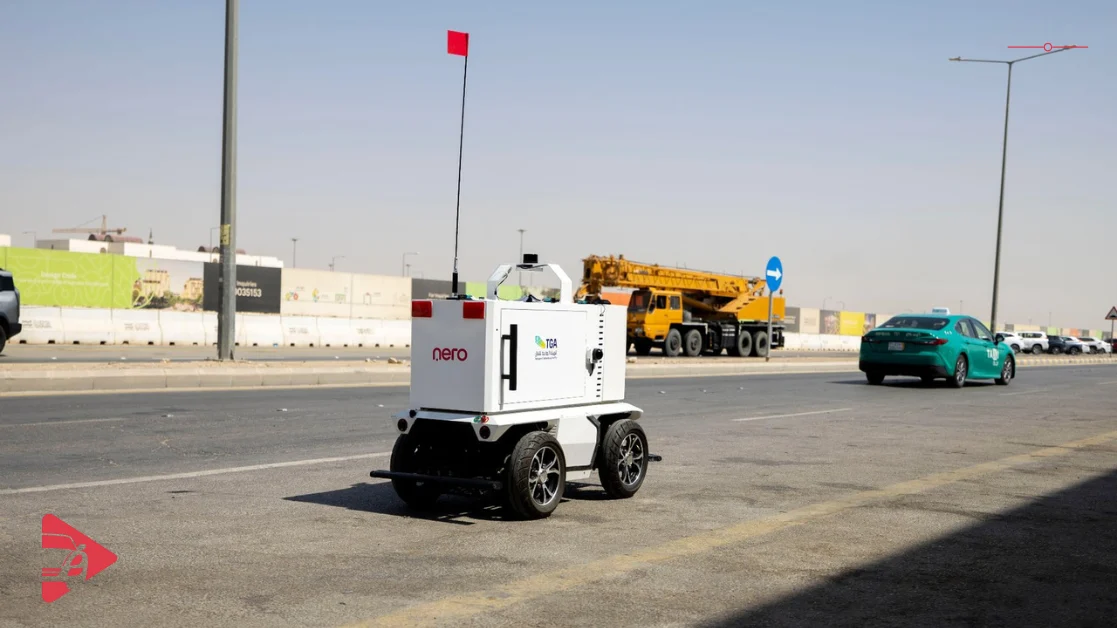
Autonomous delivery services have entered a new phase in the Kingdom of Saudi Arabia following the announcement by the Transport General Authority, in cooperation with the startup “Nero,” of the launch of the first actual operational model for “last-mile” delivery services without a driver.
The roots of this promising project go back to the “Annual Transport Hackathon” organized by the authority. The idea evolved from a mere innovative concept into a fully integrated real-world application operated within a defined geographic area in Riyadh, specifically in the Al Falah neighborhood. It is worth noting that the newly established national company “Nero” was founded at the end of 2025 by entrepreneurs Mohammed Al-Baiti and Muhannad Al-Qurashi to develop and deploy advanced technological solutions designed for Saudi streets.
How Does the Nero Vehicle Deliver Orders Without a Driver?
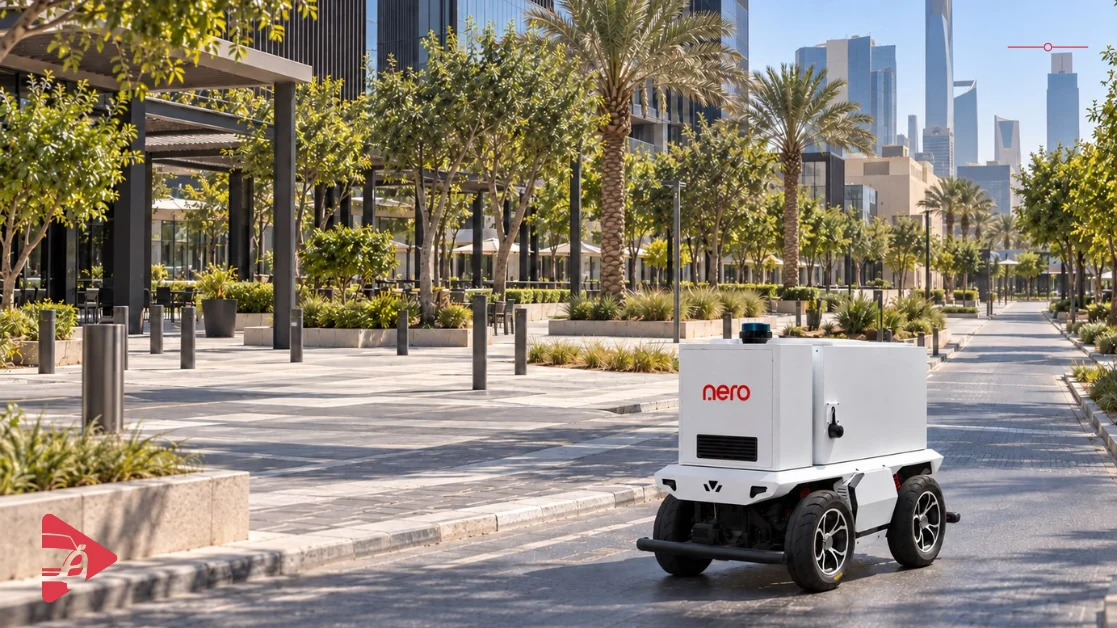
The delivery process follows simple steps that begin with an electronic order from the customer, followed by the store preparing the order and loading it into the vehicle’s storage compartment. The Nero vehicle then drives autonomously to the delivery destination, allowing the recipient to open the compartment and collect the order themselves.
The vehicle uses Level 4 autonomous driving technology, along with a sensor system that covers its surroundings across a 360-degree field of view to help it perceive the surrounding environment while in motion.
Autonomous operation does not mean the complete absence of human oversight. An operations center remotely monitors the vehicles’ movements, with the ability to stop them immediately when necessary. This model combines driving autonomy with operational supervision as part of a trial aimed at testing the technology within a defined area.
Digital Delivery Steps and Process
The delivery journey through the “Nero” vehicle is fully autonomous and digitally streamlined, beginning at the store and ending at the customer’s door, according to the following steps:
- Ordering: The customer submits the order electronically, and it immediately enters the operator’s dedicated digital delivery route.
- Loading: Orders are prepared and safely placed inside the vehicle’s designated compartments at the distribution center or store.
- Departure and Delivery: The vehicle autonomously travels to the customer through geographically defined routes (Geofenced).
- Pickup: The customer receives an instant notification when the vehicle arrives, then opens it and easily collects the shipment.
- Return: The vehicle autonomously returns to the operations center or proceeds directly to carry out its next delivery task.
Nero Vehicle Specifications and Operational Technologies
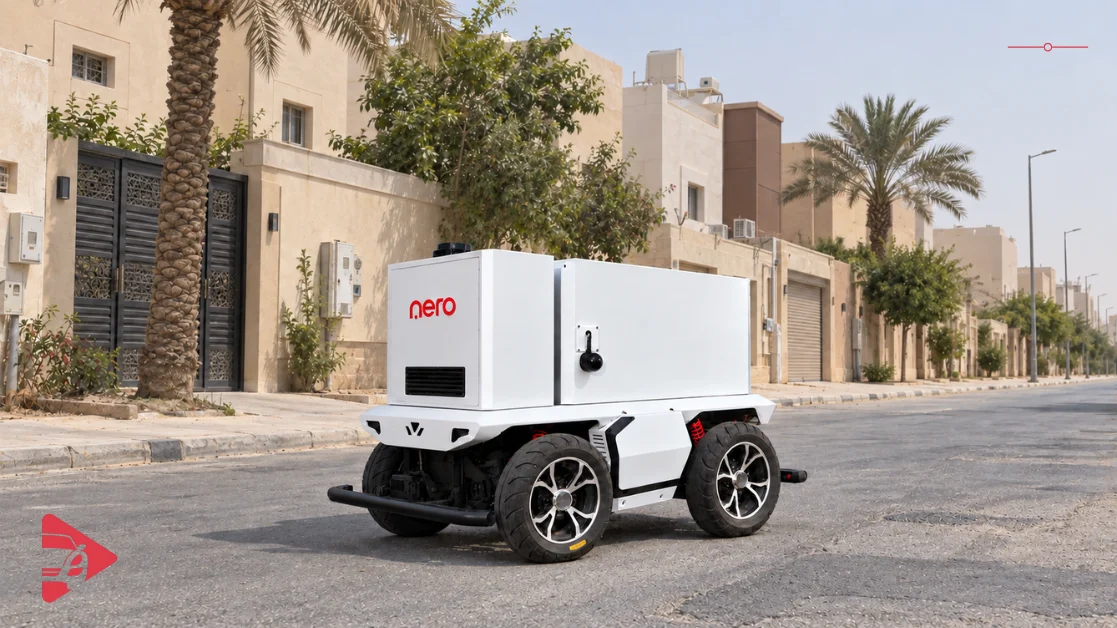
The “Nero” vehicle is an electric transport tool designed from the ground up specifically for urban delivery operations, rather than being a passenger car adapted to transport people. The vehicle has the following features:
- Autonomous Driving Level: It operates with full Level 4 autonomous driving without a driver or direct human intervention.
- Sensor System: It relies on advanced navigation technologies, including LiDAR devices and 360-degree sensor cameras, to monitor the surrounding environment, pedestrians, and maneuver flexibly.
- Payload and Speed: It has a range of up to 120 km per electric charge, a payload capacity ranging from 200 to 250 kg, and an average speed of 20 km/h.
- Monitoring and Control Systems: The vehicle is connected to a remote live operations and tracking center (Control Tower), enabling real-time performance monitoring and trip tracking, with the ability to intervene and stop it immediately in emergencies.
Technologies and Security and Safety Systems
The Nero vehicle is equipped with advanced security and safety systems, as outlined below:
- 360-Degree Sensor System: It is equipped with LiDAR, cameras, and multiple sensing systems to ensure continuous awareness of the surrounding environment and safe maneuvering.
- Remote Supervision and Monitoring: Direct, real-time monitoring of movement and performance, with the ability to intervene operationally when necessary.
- Adaptation to Saudi Streets: Designed to suit the nature and terrain of Saudi neighborhood streets without relying on continuous and connected pedestrian sidewalks, as is the case with other global delivery robots.
- Defined Geographic Area: It operates within geographically specified operational areas in accordance with the approved operating license.
Does the Nero Vehicle Reduce Delivery Costs by 85%?
Reducing delivery costs is one of the trial’s key announced objectives, as the Transport General Authority aims to achieve a reduction of up to 85% in costs.
However, this percentage is a target the trial seeks to achieve, not a confirmed financial result or savings that have already been announced. Assessing economic success requires reviewing actual operational results and comparing the total cost of autonomous delivery with traditional costs according to clear criteria.
Factors that should be considered when assessing feasibility include fleet operation and maintenance costs, energy consumption, remote supervision, and delivery operations management. The final result may also vary depending on order density, distances, and the nature of the areas in which the vehicles operate.
Therefore, the 85% figure reflects the project’s economic ambition, while actual operational data will determine its ability to reduce expenses and improve delivery efficiency.
What Are the Benefits of Autonomous Electric Delivery Vehicles?
The Nero vehicle relies on electric power, meaning it produces no exhaust emissions during operation. Electric vehicles may also help reduce local noise, depending on the vehicle’s nature and operating conditions.
The trial’s objectives extend beyond environmental considerations to include testing a new operational model that could support the development of the delivery sector in Saudi Arabia. The authority believes the project may contribute to supporting local manufacturing and creating specialized job opportunities for Saudis in engineering, technology, and remote operations management.
Nevertheless, a full assessment of the environmental and economic impact requires additional data on vehicle life cycles, electricity sources, operating costs, and the jobs that may result. Therefore, it is more accurate to view these aspects as potential objectives and opportunities rather than confirmed final outcomes of the trial.
Where Does the Nero Vehicle Operate, and Will the Service Expand in Saudi Arabia?
The Nero vehicle currently operates within a defined area in Riyadh’s Al Falah neighborhood. Limiting the operating area helps monitor the vehicles and assess delivery efficiency, safety, and user experience before expanding to other areas.
The Transport General Authority plans to gradually expand the service in the coming stages, using the trial’s results to develop the regulatory environment required to operate modern transportation technologies.
It should be noted that no announced timeline has been set for the service’s general rollout, nor has the number of participating vehicles or the neighborhoods that may be included in subsequent phases been specified. Therefore, it is not possible to determine when autonomous delivery vehicles will reach the rest of Riyadh’s neighborhoods or other Saudi cities.
To find out when cars will arrive in the rest of Saudi Arabia, please visit the Carsvid website and stay up to date with the latest car news.
The Importance of the Nero Trial for the Future of Delivery in Riyadh
The Nero trial represents a practical test of the possibility of integrating autonomous vehicles into daily delivery services in Saudi Arabia. The concept combines driverless order transportation, electric power, and remote operational supervision.
The importance of this step will depend on operational results, service reliability, safety levels, and its ability to achieve actual economic savings. The readiness of regulatory frameworks and operational infrastructure will also affect the possibility of moving from the limited trial area to broader use.
Economic, Environmental, and Strategic Impact
This operational project delivers clear strategic economic and environmental benefits to the logistics system:
- Cost Reduction: The project aims to reduce the cost of last-mile delivery operations by up to 80%–85%.
- Environmental Sustainability: The fleet relies entirely on electric power, eliminating carbon emissions and reducing noise in residential areas.
- Manufacturing and Specialized Jobs: The project contributes to supporting local manufacturing of autonomous vehicles and providing specialized employment opportunities for Saudi professionals in engineering, technology, and remote digital operations management.
- Regulatory Development: This residential-area operation serves as a real-world test for preparing the regulatory environment and expanding the service in the future to other cities and regions across the Kingdom.
In Brief
The Transport General Authority has launched a trial of the autonomous electric Nero vehicle for delivering orders in Riyadh’s Al Falah neighborhood, using Level 4 autonomous driving technology and a 360-degree sensor system with remote monitoring. Reducing delivery costs by up to 85% remains one of the project’s targets, pending an assessment of actual operational results before its economic feasibility and expansion opportunities can be determined.