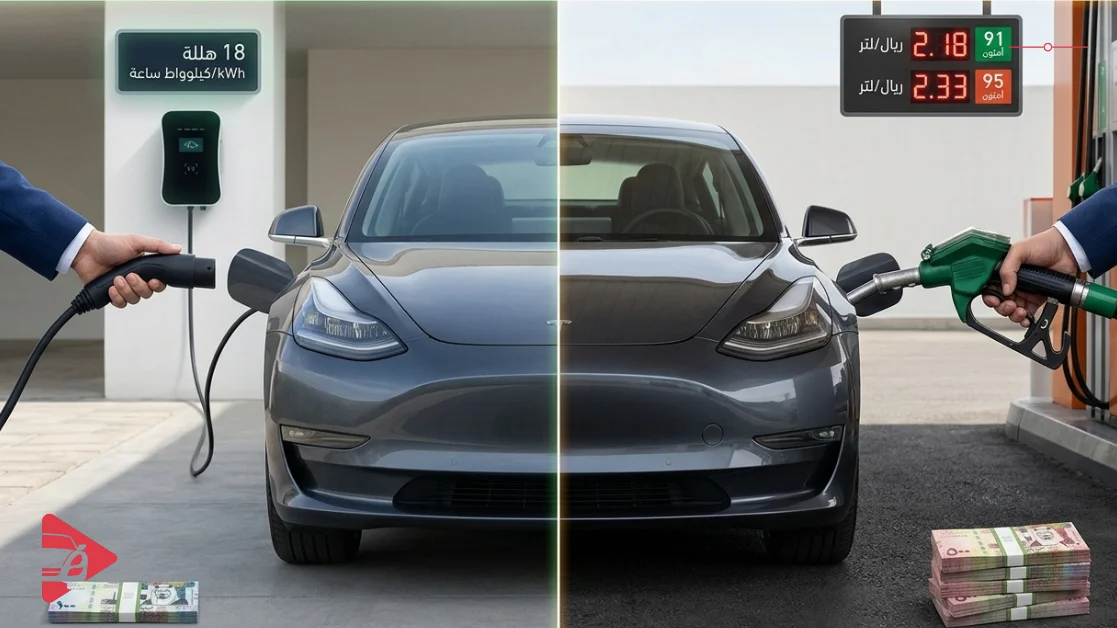
Home charging for electric vehicles in Saudi Arabia is significantly more cost-effective than refueling with gasoline; the monthly cost of charging an electric vehicle decreases by 60% to 70% when relying on residential charging (approximately SAR 65 per month for 2,000 km), compared with around SAR 290 for Gasoline 91 and SAR 310 for Gasoline 95 for the same distance. Therefore, switching to electric vehicles in the Kingdom of Saudi Arabia is considered a pivotal step aligned with the Kingdom’s Vision 2030 to promote sustainability and reduce reliance on traditional fuel.

الدليل
Comparison Table of Charging and Gasoline Costs for 2,000 km per Month
| Fuel / Energy Option | Unit Price | Monthly Consumption | Estimated Monthly Cost |
| Home Charging (Residential) | SAR 0.18 / kWh | 360 kWh | SAR 64.8 |
| Gasoline 91 | SAR 2.18 / liter | 133.3 liters | SAR 290.6 |
| Gasoline 95 | SAR 2.33 / liter | 133.3 liters | SAR 310.6 |
| Commercial Fast Charging | SAR 1.00 / kWh | 360 kWh | SAR 360.0 |
Monthly Gasoline Cost in Saudi Arabia
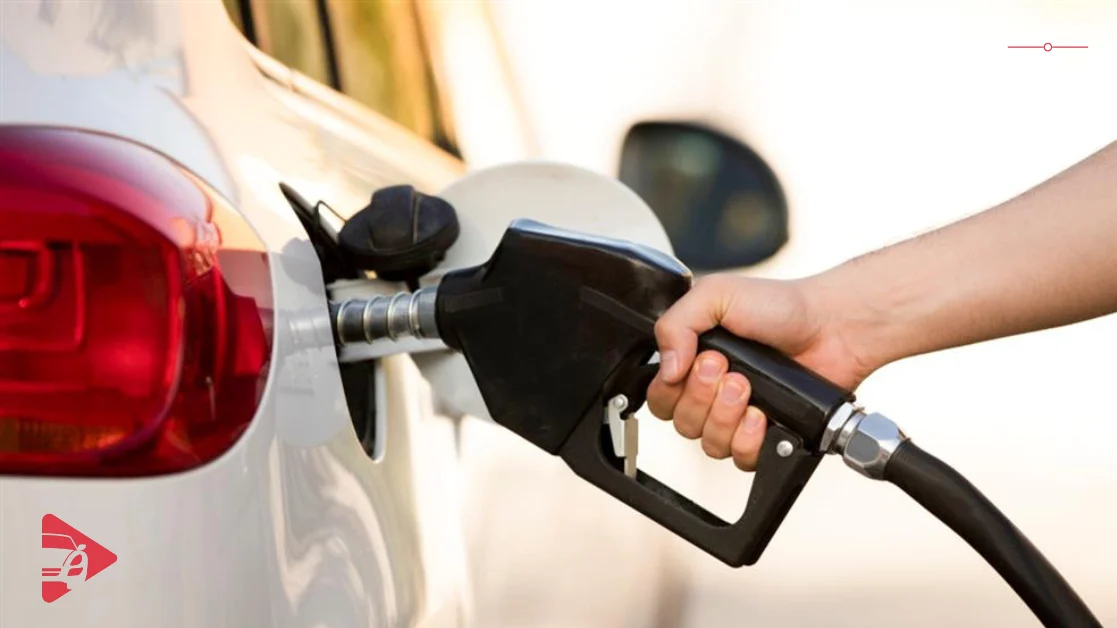
The Kingdom sets official gasoline prices with an upper limit of:
- Gasoline 91: SAR 2.18 / liter.
- Gasoline 95: SAR 2.33 / liter.
When driving a conventional vehicle with average fuel consumption (an average of 15 kilometers per liter) for an average distance of 2,000 km per month, the key cost points are as follows:
- Monthly consumption: 2,000 km ÷ 15 km/liter = 133.3 liters.
- Monthly cost (Gasoline 91): 133.3 × 2.18 = SAR 290.6.
- Monthly cost (Gasoline 95): 133.3 × 2.33 = SAR 310.6.
Monthly Electric Charging Cost in Saudi Arabia
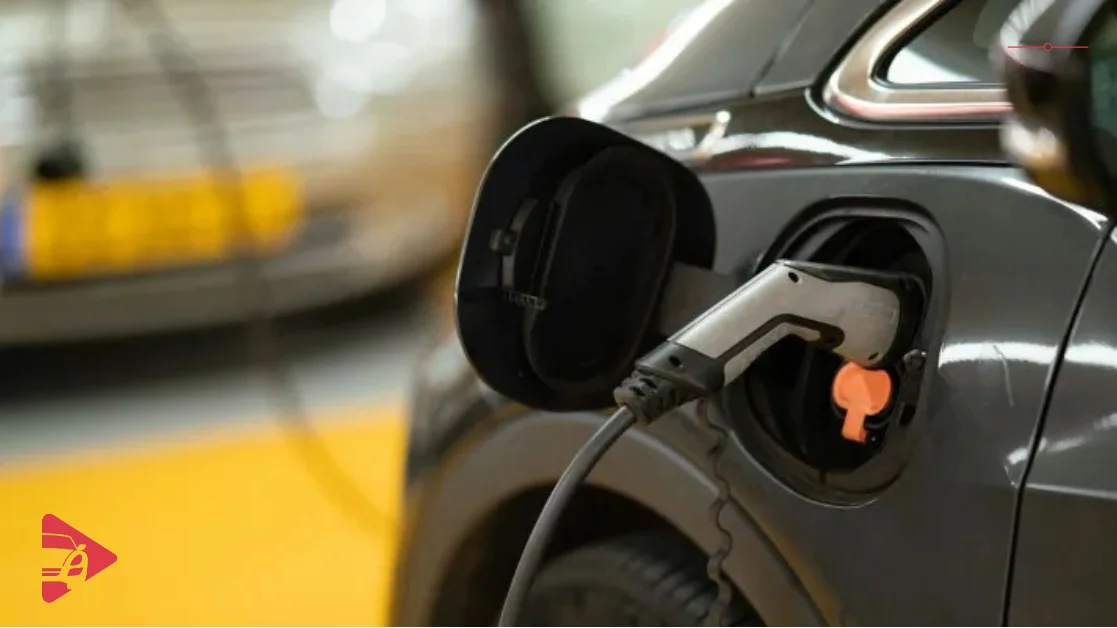
This is considered the most cost-effective method, as the cost of charging an electric vehicle primarily depends on the source of electrical energy:
Cost of Home Charging
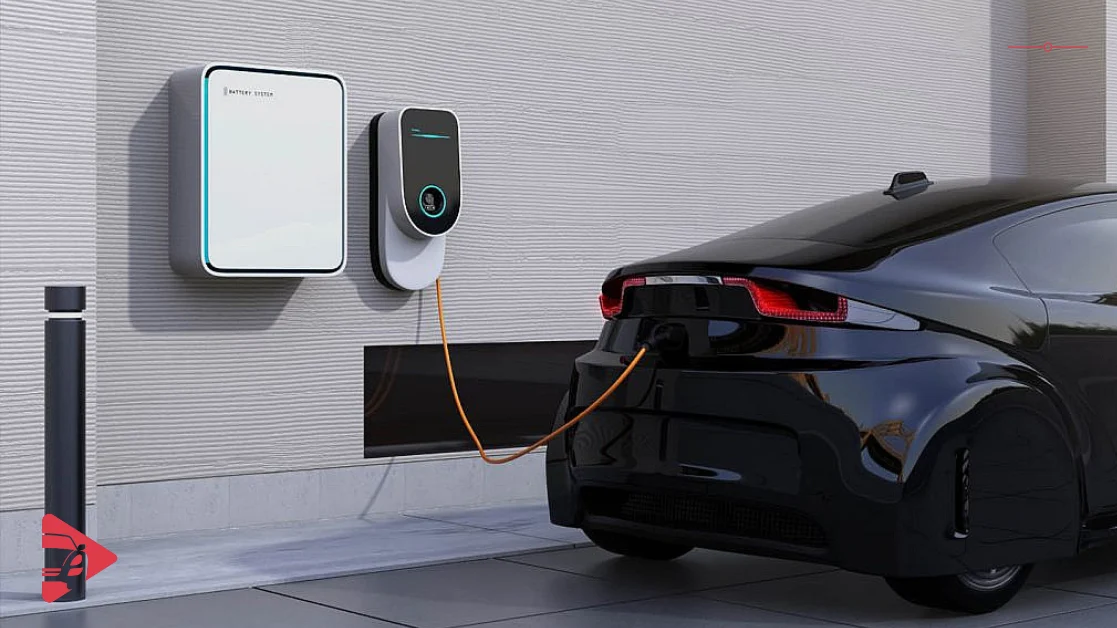
Residential electricity for the first tier (up to 6,000 kilowatt-hours) is charged at 18 halalas (SAR 0.18) per kilowatt-hour.
Assuming an average electric vehicle consumes 18 kilowatt-hours per 100 km and travels 2,000 km per month:
- Total consumption: 360 kilowatt-hours.
- Monthly cost: 360 × 0.18 = only SAR 64.8.
Cost of Public Fast Chargers
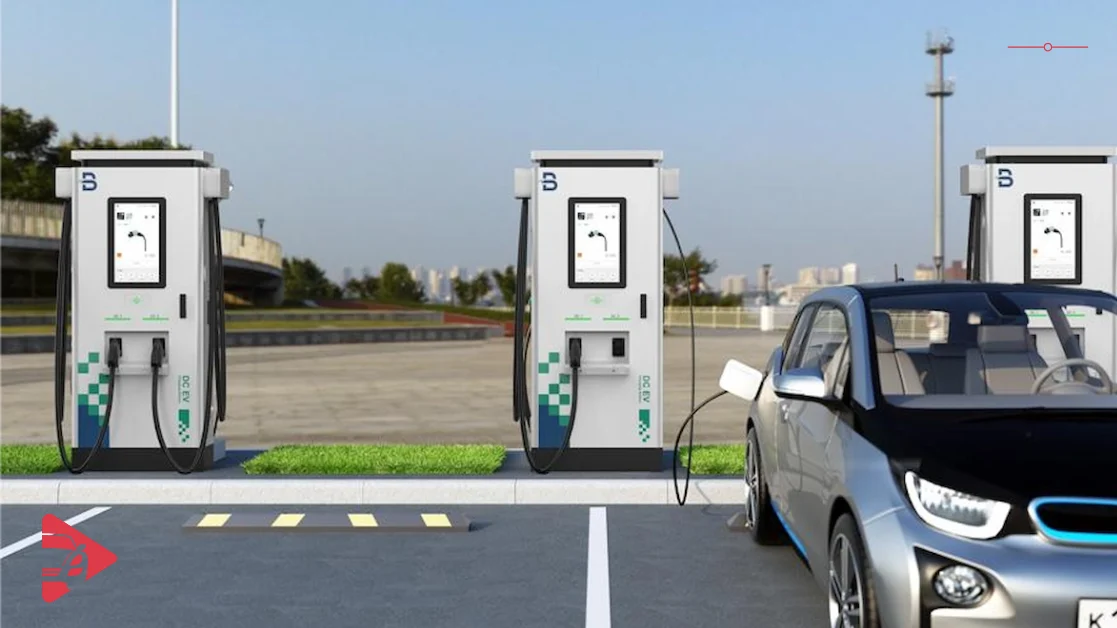
Commercial public station tariffs vary; the cost of ultra-fast charging ranges from SAR 0.80 to SAR 1.20 per kilowatt-hour, making the monthly cost for the same distance approximately SAR 288 to SAR 432.
Find out whether electric vehicles are suitable for Saudi Arabia
Factors That Contribute to the Cost Difference Between Charging and Gasoline
The following are the main factors that reduce the cost of charging electric vehicles and tip the balance in their favor:
- Routine maintenance costs: Electric vehicles do not have conventional engine components, so they do not require engine oil, filter, or spark plug changes, reducing routine maintenance costs by up to 40%.
- Effect of summer heat: Operating the air conditioner at maximum capacity during summer in Saudi Arabia increases energy consumption in electric vehicles by 15% to 20%, reducing the driving range, but the financial advantage of electricity remains.
- Home charger installation: Relying on home charging requires an initial investment to install a wall-mounted charger (Wallbox), costing between SAR 2,500 and SAR 5,000.
Long-Term Savings from Charging
After electric charging outperforms gasoline due to its lower monthly cost, we review the most important savings points over the annual period:
Actual Annual Savings
When savings are calculated over an entire year instead of a single month, the financial difference becomes clearer. While the annual home-charging cost for an electric vehicle is approximately SAR 777.6 (64.8 × 12 months), the cost of Gasoline 91 for the same distance reaches SAR 3,487 annually. This means net savings of approximately SAR 2,710 per year—almost enough to cover the full cost of installing a home wall charger from the savings achieved during the first year alone.
When Does the User Recover the Cost of the Wall Charger?
Many people considering switching to electric vehicles wonder about the financial viability of installing a wall charger (Wallbox) costing between SAR 2,500 and SAR 5,000. Assuming monthly savings of approximately SAR 225 (the difference between the cost of Gasoline 91 and home charging), the user recovers the cost of the wall charger within only 11 to 22 months—less than two years in most cases—after which all subsequent months represent pure savings.
Cumulative Savings Over 5 Years
For those considering long-term ownership, the cumulative difference between the two fuels reveals a notable financial reality. Over five years, the cumulative cost of home charging is only approximately SAR 3,888, compared with nearly SAR 17,436 for Gasoline 91 over the same monthly distance—a cumulative difference exceeding SAR 13,500. This figure demonstrates that switching to electric vehicles is not merely a temporary saving, but a strategic long-term financial decision.
Strategic Tips for Maximizing Savings
Here are the most important tips for adopting electric charging to achieve maximum savings:
- Rely on overnight charging whenever possible: This reduces pressure on your daily consumption and keeps you within the lower-priced consumption tier.
- Monitor your total electricity consumption: Adding charging to an already high household consumption level may move you into a higher pricing tier, so calculate your full monthly consumption before relying entirely on home charging.
- Balance home and fast charging according to your travel patterns: Use home charging for driving within the city and public fast chargers wisely for long journeys.
- Plan to install the wall charger early: The sooner you start, the sooner you will recover its cost within the first two years of use.
- Calculate annual rather than monthly savings alone: A long-term perspective gives you a clearer picture of the value of switching to an electric vehicle.
Frequently Asked Questions
How much does it cost to fully charge an electric vehicle at home in Saudi Arabia?
The cost of fully charging a 60-kilowatt-hour battery at home ranges from SAR 10.8 to SAR 18, depending on the residential electricity consumption tier.
Is home charging an electric vehicle cheaper than gasoline in Saudi Arabia?
Yes, home charging saves more than 60% to 70% of the cost compared with filling up with Gasoline 91 or 95 for the same distance traveled.
How much does it cost to install a home wall charger for an electric vehicle?
The cost of purchasing and installing a wall charger (Wallbox) in Saudi Arabia ranges from SAR 2,500 to SAR 5,000, depending on its power and electrical installation costs.
Is an electric vehicle battery affected by the summer heat in Saudi Arabia?
Yes, high temperatures increase energy consumption due to battery cooling and air-conditioning operation, which may reduce the driving range by 15% to 20%.
What is the charging tariff at public electric vehicle charging stations in Saudi Arabia?
The tariff varies according to the provider and charger type, generally starting at SAR 0.80 and reaching SAR 1.20 per kilowatt-hour for fast chargers.
How many kilometers can an electric vehicle travel on a single charge?
Most modern electric vehicles can travel between 350 and 550 kilometers on a single full charge, depending on battery capacity and driving style.
Is maintaining an electric vehicle cheaper than maintaining a gasoline vehicle?
Yes, electric vehicle maintenance costs up to 40% less because these vehicles do not require engine oil, filters, or spark plugs and have fewer moving parts.
In Brief
Home charging an electric vehicle is by far the most cost-effective option compared with gasoline in the Kingdom of Saudi Arabia. Therefore, rely on home charging during nighttime hours to secure the lowest tariff and highest efficiency. If most of your driving takes place within the city, electric vehicles will provide maximum budget savings. For long and frequent trips between cities, it is preferable to balance the use of public fast chargers.