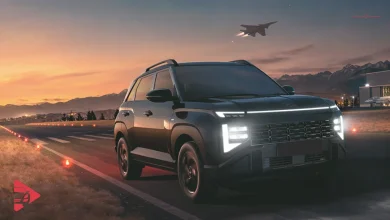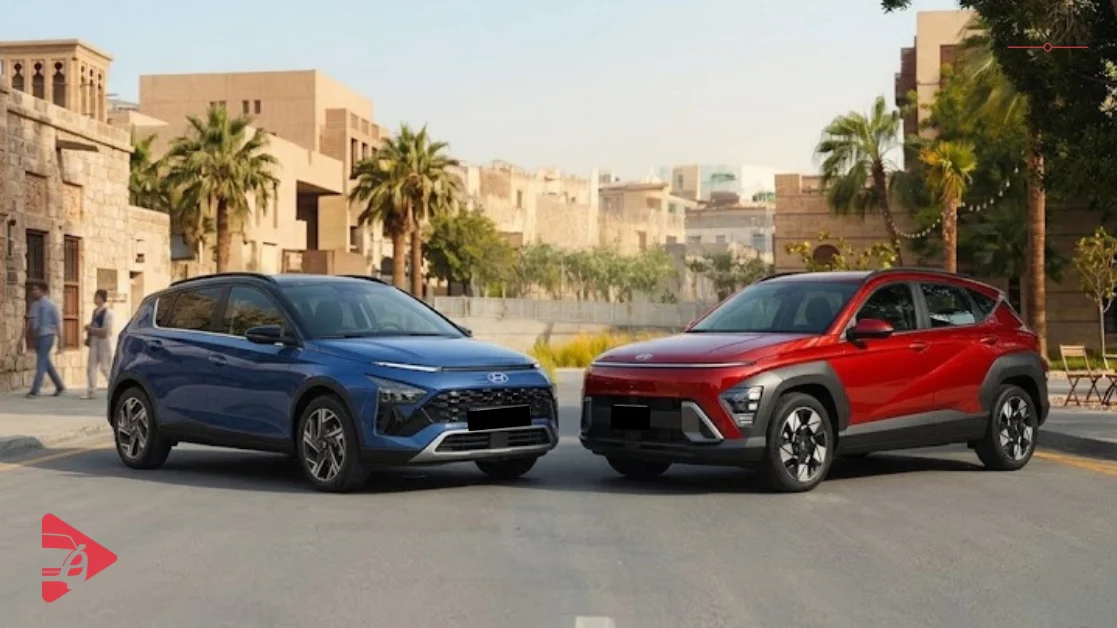
The main difference between Hyundai Bayon and Hyundai Kona lies in size, performance, and equipment, making the comparison important for those looking for an SUV that meets their daily needs and budget. While the Hyundai Bayon stands out with its compact design and ease of maneuvering in cities, the Hyundai Kona offers a larger size and various equipment and engine options, including 2.0-liter gasoline engines and 1.6-liter hybrid options depending on the trim.
The Hyundai Bayon and Kona also differ in engine characteristics and performance. The Bayon focuses on a small 1.0-liter turbocharged engine with an expected fuel consumption rate of 5.5 km/l, while the Kona is available with a 2.0-liter gasoline engine, along with 1.6-liter hybrid options depending on the trim and an average fuel consumption rate of 13 km/l.
In this comparison, we review the key differences between the two cars in terms of design and dimensions, performance and fuel consumption, interior space, technologies and safety systems, and prices. We also explain what distinguishes each car to help you determine the option best suited to your needs, while noting that Bayon specifications related to the new generation may be expected specifications and may not be final or available in all markets.
Hyundai Cars for Sale in Saudi Arabia

Quick Comparison Table Between the Hyundai Bayon and Kona
| Item | Hyundai Bayon | Hyundai Kona |
|---|---|---|
| Category | Small crossover | Larger compact SUV |
| Best use | Daily commuting and city driving | City driving and family trips |
| Engine being compared | 1.0-liter turbo | 2.0-liter gasoline, with 1.6-liter hybrid options |
| Power | 113 hp | 149 hp |
| Transmission | Dual-clutch DCT according to expected specifications | Automatic |
| Fuel economy | Depends on the final version | 13 km/l |
| Seating capacity | Varies by version | 5 seats |
| Space | Compact dimensions and easy maneuverability | Relatively more space |
| Price in Saudi Arabia | Expected to start at SAR 70,000 | From SAR 85,031 to SAR 114,931 depending on the trim |
| Key attraction | Compact size and focus on economy | Variety of trims and equipment, plus additional space |
Thus, the Carsvid team reached the preliminary conclusion that the Bayon is suitable for those who prioritize compact size and easy city driving, while the Kona appears to be a practical choice for those who need a larger car and want to choose from several available trims.
Exterior Design and Identity Differences
Hyundai Bayon: A Compact Crossover with a Youthful Character
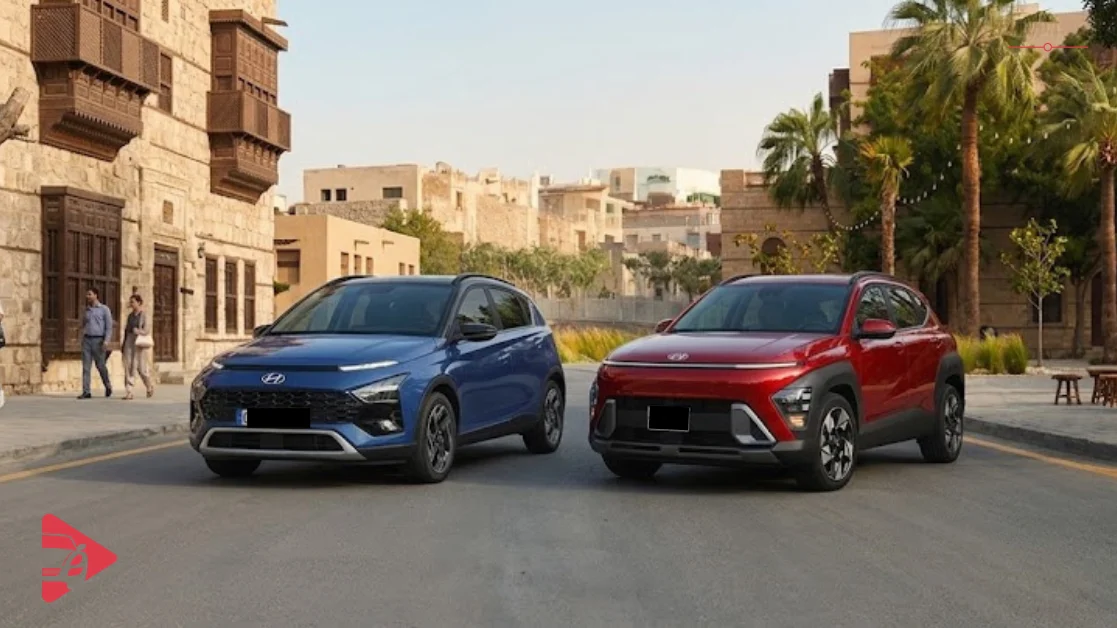
The Bayon features a design that balances the appearance of crossover vehicles with dimensions close to those of small cars. Its exterior lines and distinctive headlamp design give it a modern identity, while its ground clearance helps it handle urban roads and everyday speed bumps, with the need to consider the actual ground clearance.
The expected new generation of the Bayon is also said to enhance the car’s presence through a higher roof, black front pillars, and a split lighting signature. These elements would give it a more modern and sporty appearance.
Hyundai Kona: Greater Presence and a More Distinctive Design
The Kona comes with a larger size and a design that gives it a stronger presence on the road. These differences are reflected in the body shape, cabin, and space available for passengers and luggage, making it a noteworthy option for those who want a versatile compact SUV.
The choice between the two cars here depends on the buyer’s preference: the Bayon for those looking for a small, easy-to-use crossover, and the Kona for those who prefer a larger car with a variety of equipment trims.
Differences in Dimensions and Interior Space
Bayon: Practical Use of Its Small Size
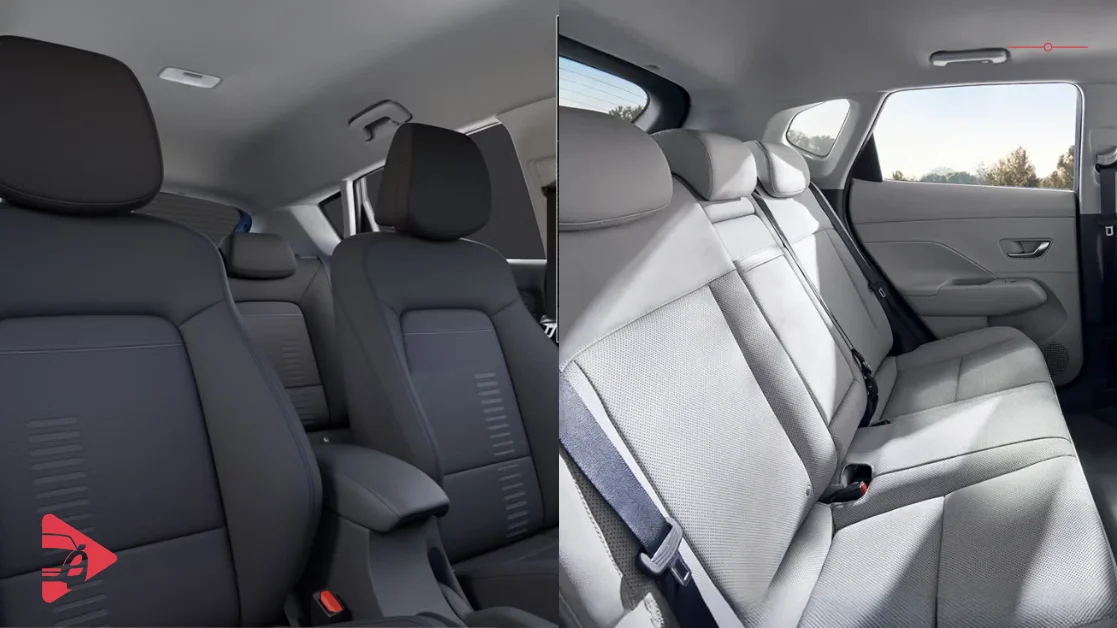
The Bayon’s compact dimensions help it maneuver through congested streets and park in tight spaces. The expected new model is reported to have an overall length of approximately 4,180 mm, with a move toward a higher roof to make better use of vertical space inside the cabin.
This design is expected to provide better headroom, particularly for passengers in the front and rear seats, with seat design that reflects actual comfort.
Kona: Additional Space for Family Use
The Kona benefits from its larger dimensions to provide space better suited to family use and trips. The car offers five seats, while the actual rear-seat space and luggage-compartment capacity remain among the most important elements that should be assessed directly before purchase.
If the car is used mostly by one or two people for city travel, the Bayon may be sufficient. However, if the car will be used frequently with family members or luggage, it is useful to compare the Kona and Bayon practically in terms of legroom, headroom, and storage capacity.
Differences in Engines, Performance, and Fuel Consumption
Bayon Engine
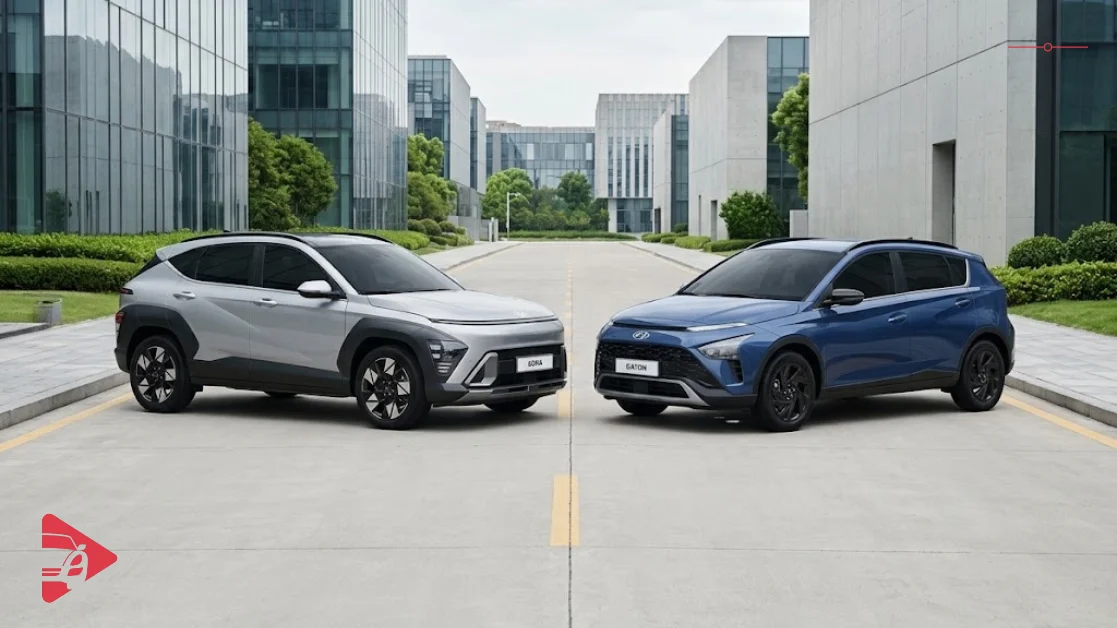
Among the most widely circulated specifications for the expected new generation of the Bayon is a three-cylinder 1.0-liter turbocharged engine, with expectations of a mild-hybrid version producing up to 113 hp and a dual-clutch automatic transmission (DCT).
This powertrain is intended to provide suitable performance for a small car, with good response during acceleration and efficient fuel consumption. The turbocharger helps make use of the small engine capacity, while the mild-hybrid system can support operating efficiency under certain conditions.
Hyundai Kona Engine
The Hyundai Kona is available with a 2.0-liter gasoline engine in several trims, along with 1.6-liter turbocharged hybrid options among the available trims.
The 2.0-liter version specifications include a four-cylinder engine, an automatic transmission, and front-wheel drive. The engine produces 105 hp at 5,700 rpm, with a 32-kW electric motor, bringing total output to 149 hp. Torque reaches 144 Nm at 4,500 rpm. Acceleration from zero to 100 km/h ranges from 10 to 10.5 seconds, while specifications vary according to the engine and trim.
Which Is More Fuel-Efficient?
The smaller turbocharged engine in the Bayon may offer an advantage in fuel consumption under suitable driving conditions, especially during moderate urban use. However, it is not appropriate to state that the Bayon is more economical in all situations without comparing the official consumption figures of two specific versions and testing them under similar conditions.
The Hyundai Kona’s fuel consumption rate is 13 km/l. Actual consumption may vary depending on the engine type, trim, and driving conditions.
In Saudi Arabia, fuel costs are affected by factors such as traffic congestion, trip length, driving speed, air-conditioning use, and vehicle load. Therefore, it is advisable to compare the official certified consumption rate for each version before making a decision.
Screens, Technologies, and Cabin Equipment
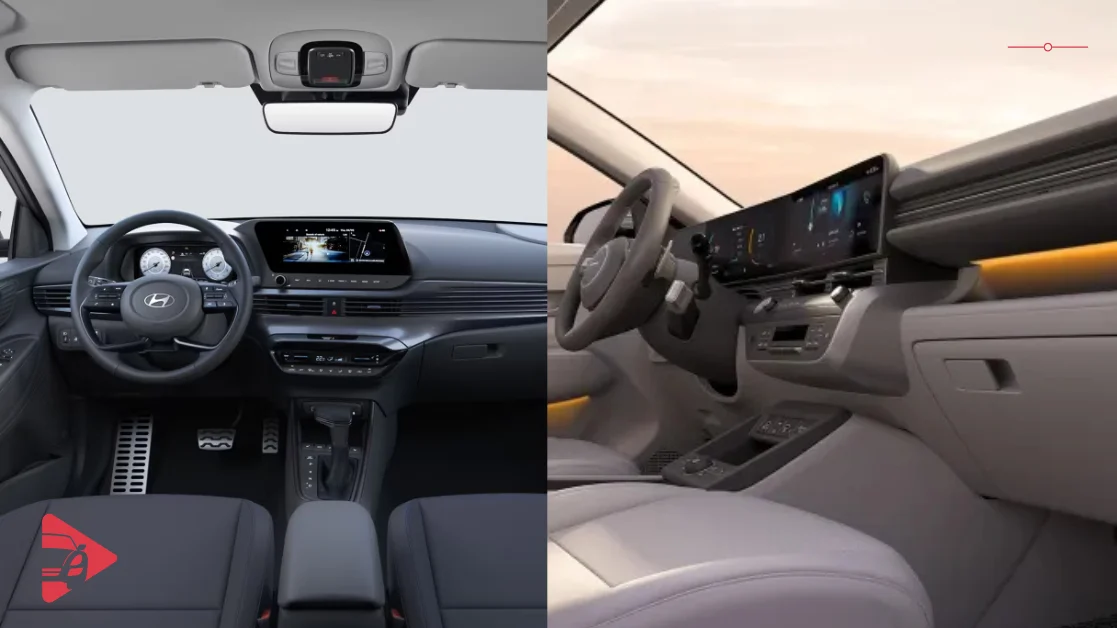
Bayon: A Move Toward a Modern Digital Interface
The new generation of the Bayon is expected to include an infotainment screen and a digital instrument display, with size options of up to 10.25 or 12.3 inches, in addition to the possibility of using two adjacent 12.3-inch screens in some versions.
Depending on the market and trim, the Bayon’s known equipment options include:
- An infotainment screen supporting smartphone connectivity through Apple CarPlay and Android Auto, depending on the version.
- A digital instrument panel or driver information display, depending on the equipment.
- An audio system and USB ports for charging and connectivity.
- A rear camera and parking sensors, depending on the trim.
- Comfort features such as climate control and adjustable seats, depending on the version.
- Driver-assistance systems that vary by market and equipment level.
It should not be assumed that all these features are available in every car, as specifications may vary depending on the vehicle trim.
Kona: Equipment Variety According to the Trim
The Kona offers several trims, allowing buyers to choose a car according to their budget and comfort and technology needs. The trims include base, mid-level, and high-end versions, in addition to hybrid options.
Differences between the trims include cabin and seat equipment, screens and connectivity, safety systems, and driver-assistance features.
Differences in Safety and Driver-Assistance Systems
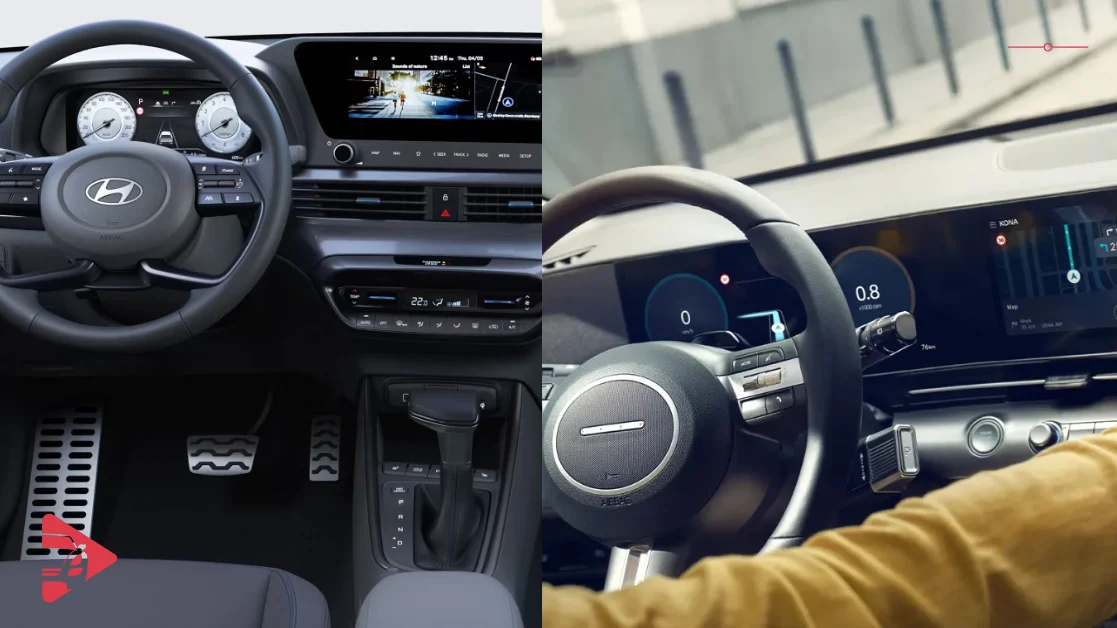
Safety systems play an important role when choosing between the two crossovers, but the presence, name, and operation of a system may vary depending on the trim and market.
Safety Systems in the Bayon
Depending on the version and market, the Bayon’s equipment may include a range of safety and driver-assistance systems, such as:
- Forward collision-avoidance assist.
- Lane departure warning or lane-keeping assist.
- Driver attention warning.
- Electronic stability control.
- Anti-lock braking and brake-force distribution.
- A rear camera or parking sensors, depending on the equipment.
This remains a general list of features that may be available on the model depending on the version, with differences according to the trim and equipment.
Safety Systems in the Kona
Safety equipment in the Kona varies according to the trim. When comparing the cars, you should verify the availability of systems such as automatic emergency braking, lane-keeping assist, blind-spot monitoring, rear cross-traffic alert, as well as airbags, stability systems, and braking systems. The following are the key safety systems available:
- Lane Following Assist (LFA)
- Cruise Control
- Parking Assistance System
- Airbag systems and protection features
The presence of a system’s name in the specifications list alone is not sufficient. It is important to know whether it is standard or available in a higher trim and whether it operates under the driving conditions required by the driver.
Hyundai Kona and Bayon Prices
Considering that the Hyundai Bayon has not yet arrived in the Saudi market, we have provided estimated prices based on international prices:
Hyundai Kona Prices in Saudi Arabia
The Hyundai Kona is available in several trims, including 2.0-liter engines and 1.6-liter hybrid options. The trims and prices are as follows:
| Trim | Price in Saudi riyals |
|---|---|
| 1.6T Comfort Hybrid/GLS+ (Top) | SAR 111,481 |
| 1.6T Smart Hybrid/GL (Mid) | SAR 99,981 |
| 2.0L A/T Comfort/GLS (2Tone Roof) (Top) | SAR 99,981 |
| 2.0L A/T Fleet/L (Base) | SAR 85,031 |
| 2.0L A/T Smart/GL (Mid) | SAR 91,931 |
| 2.0L A/T Ultimate/LTD (Top+) | SAR 114,931 |
These prices show a range starting with the base trim and extending to the highest-equipped version. Final prices may vary depending on available offers, fees, equipment, and sales conditions, so it is advisable to confirm the final price with the dealer before purchasing.
Hyundai Kona Cars for Sale in Saudi Arabia
Hyundai Kona Price Table by Model Year
| Model year | Price range in Saudi riyals |
|---|---|
| 2026 | SAR 102,000–102,000 |
| 2024 | SAR 69,000–69,000 |
| 2023 | SAR 55,000–65,000 |
| 2022 | SAR 53,000–59,000 |
| 2020 | SAR 44,000–56,000 |
| 2019 | SAR 40,000–47,000 |
Hyundai Bayon Price
As of now, no confirmed official price is available here for the new generation of the Bayon in the Saudi market. Based on circulating estimates for Bayon models, hypothetical price ranges may appear as follows:
| Estimated trim | Estimated price in Saudi riyals |
|---|---|
| Smart | SAR 73,000–78,000 |
| Comfort | SAR 82,000–87,000 |
| Premium | SAR 92,000–98,000 |
These figures are estimates and are not official Hyundai Bayon prices in Saudi Arabia. To find out car prices when the vehicle arrives, we recommend visiting the Carsvid website and following the car prices regularly.
Competitors in the Saudi Market
The Bayon and Kona compete with several small and compact cars targeting similar needs. The key models that can be included in the comparison are:
- Kia Stonic: A small crossover with a youthful character, worth comparing with the Bayon in terms of size, engine, and equipment.
- Toyota Raize: A compact car focused on ease of daily use, best compared in terms of price, safety equipment, and operating costs.
- Ford Puma: An option in the small crossover category in markets where it is available, with specifications and prices varying by market.
- Other compact SUVs: These may suit those who want more space or additional equipment, so the actual prices and trims available in the Kingdom should be compared.
No single car excels in every aspect. The advantage depends on the final price, safety equipment, comfort, fuel consumption, and the availability of maintenance services and spare parts.
Which Is More Suitable for You in Saudi Arabia?
Choose the Bayon if you are looking for:
- A small crossover that is easy to maneuver around the city.
- Dimensions suitable for parking spaces and congested streets.
- A small turbocharged engine.
- A youthful design and a cabin with a modern digital focus.
- A competitive purchase price.
Choose the Kona if you are looking for:
- A larger car for daily and family use.
- Additional space for passengers and luggage.
- Multiple trim and equipment options.
- A 2.0-liter gasoline engine or a 1.6-liter hybrid option, depending on the trim.
- Fuel economy of 13 km/l.
- The ability to choose between different levels of comfort and technology according to your budget.
Frequently Asked Questions
Is the Hyundai Bayon officially available in Saudi Arabia?
No. At the time of writing, the Hyundai Bayon was not officially available in Saudi Arabia, and its arrival is still awaited.
How much power does the Hyundai Bayon engine produce?
The Bayon has a 1.0-liter turbo engine, with the possibility of a mild-hybrid system producing up to 113 hp and a dual-clutch transmission.
How much does the Hyundai Kona cost in Saudi Arabia?
The prices of the mentioned Hyundai Kona trims start at SAR 85,031 for the 2.0L A/T Fleet/L trim and reach SAR 114,931 for the 2.0L A/T Ultimate/LTD trim.
Is the Bayon more fuel-efficient than the Kona?
The Bayon’s smaller engine may be more efficient under certain conditions, while the Kona achieves 13 km/l. Actual consumption depends on driving conditions, traffic congestion, speed, and air-conditioning use.
What is the Bayon screen size?
There are expectations of digital screens measuring up to 12.3 inches, and possibly two adjacent screens in some equipment configurations.
Which is better for a family: the Bayon or the Kona?
The Kona appears to be a suitable choice for those who need more space and a variety of trims, while the Bayon may meet the needs of a small family that prefers a compact car. A practical assessment of the rear seats and luggage compartment remains essential before making a decision.
In Summary
The comparison reflects a difference in the philosophy of the two cars. The Hyundai Bayon targets those looking for a small and practical crossover, with an expected focus on a small turbocharged engine and modern digital equipment in the new generation. The Hyundai Kona, meanwhile, offers a larger size and multiple trim options, including 2.0-liter gasoline engines and 1.6-liter hybrid options, with prices varying according to the trim.
If ease of maneuvering and compact size are the priorities, the Bayon may be worth waiting for until the specifications and price of the local version are confirmed. However, if you want a larger car with multiple engine, trim, and price options and need additional space, the Kona is worth viewing and test-driving.
In either case, do not base the comparison solely on engine size or starting price. Instead, compare trim by trim and verify the safety systems, warranty, and equipment.