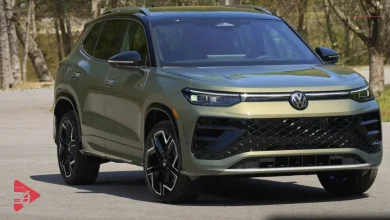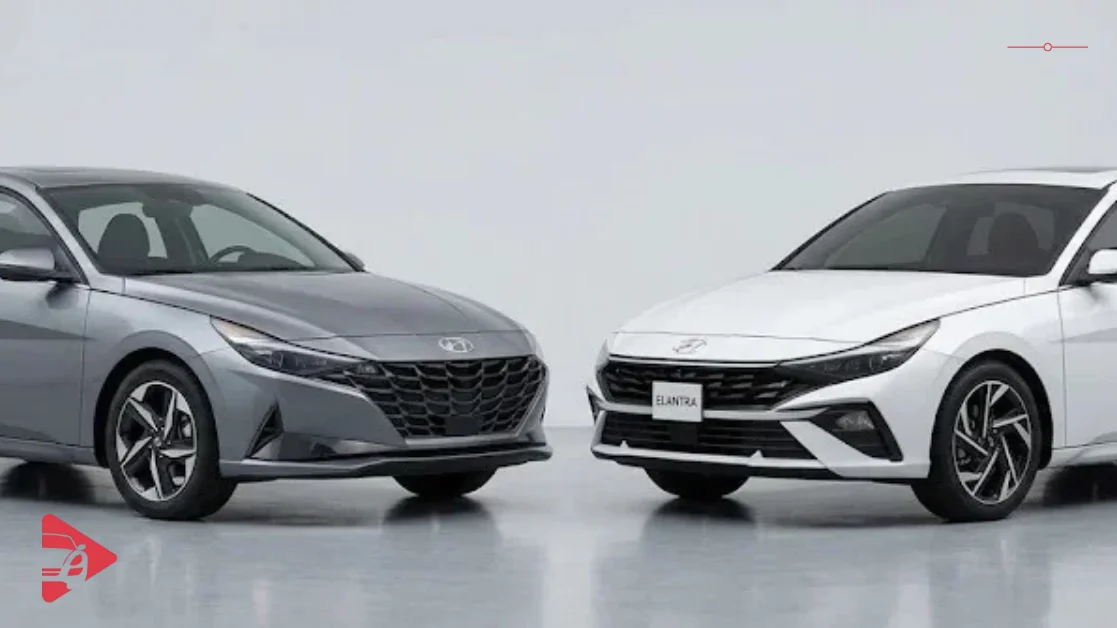
When searching for Hyundai sedans, two names appear repeatedly: Avante and Elantra. This raises questions among many people interested in buying a car, particularly in Arab markets where the name Elantra is widespread, while some people know the same car as the Avante.
Is Avante a different car from Elantra? Are there differences in the engine, design, and equipment between them? Which one is better in terms of performance, fuel economy, comfort, and value for money?
The truth is that Avante and Elantra are commercial names for the same compact sedan from Hyundai. The company uses the name Avante in the South Korean market, while it uses the name Elantra in most international markets. However, specifications, trims, engines, and equipment systems may vary depending on the country and model year.
In this comprehensive guide, we review the difference between Avante and Elantra in terms of name, history, exterior design, interior, engines, performance, fuel consumption, technology, safety systems, and prices, with a focus on the specifications available in Saudi Arabia and the UAE, to help you choose the car that best suits your needs and budget.
Hyundai cars for sale in Saudi Arabia

Quick Summary
Avante and Elantra are commercial names for the same compact sedan from Hyundai. The company uses the name Avante in South Korea and Elantra in most international markets, including Arab markets. Therefore, the difference between them is not the basic identity of the car, but rather the regional specifications, which may include engines, trims, equipment, safety systems, and detailed designs according to the model year and market. In Saudi Arabia, the Elantra is available with a 1.5-liter gasoline engine producing 113 hp and a 2.0-liter engine producing 157 hp, while Avante options in some markets include 1.6-liter gasoline, hybrid, and LPI engines.
Elantra prices in Saudi Arabia start at SAR 86,694 for the 1.5 GL trim and reach SAR 108,924 for the 2.0 LTD trim. Higher trims include advanced equipment such as dual screens, ventilated seats, wireless charging, and some Hyundai SmartSense systems. Avante, on the other hand, offers a wider variety of engines in some markets, particularly hybrid versions, but its prices and equipment vary according to the market and trim. In general, the locally available Elantra is a practical choice for those concerned with dealer warranty, ease of maintenance, and parts availability, while an imported Avante may suit buyers seeking an engine or equipment unavailable locally. The engine, trim, and final price remain more important than the difference in name when making a purchase decision.
What Is the Difference Between Avante and Elantra?
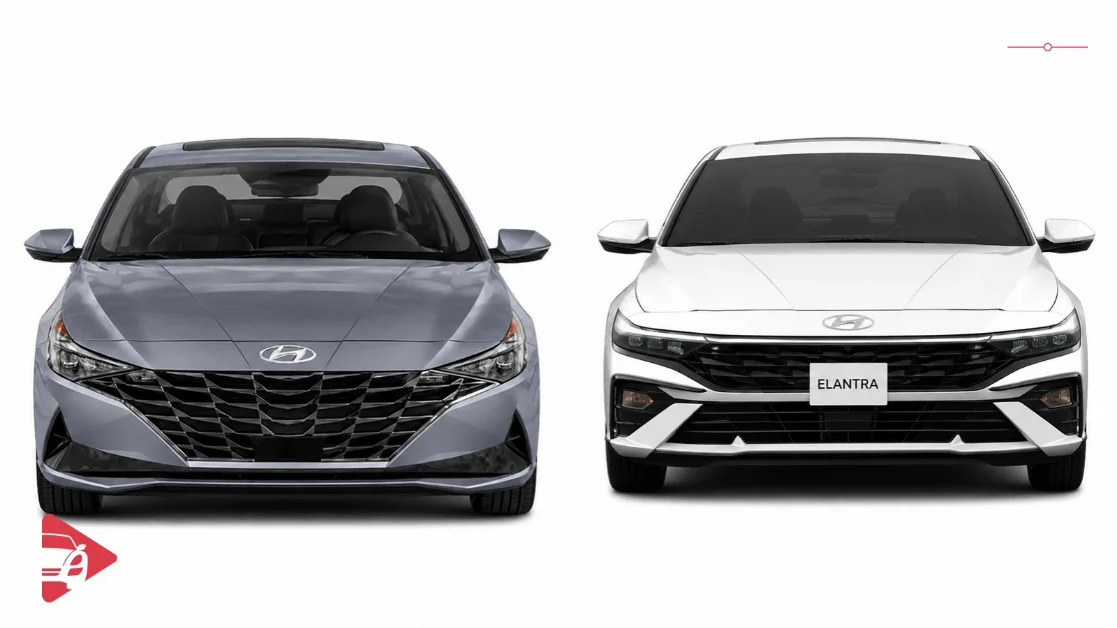
The short answer is that Avante and Elantra are not two separate cars; they are two different names for the same Hyundai model.
Hyundai uses the name Avante in South Korea, while it uses the name Elantra in most international markets, including many Arab and American markets.
The company has adopted this regional marketing distinction for years while maintaining the car’s core identity as a compact sedan aimed at buyers seeking a practical vehicle that combines comfort, technology, and modern design.
However, it is important to know that matching names and models do not necessarily mean identical specifications. The Korean version may differ from the export version in terms of engines, equipment, trims, and safety systems.
The main similarities and differences include:
- Name: Avante is the name used in South Korea, while Elantra is used in most other markets.
- Manufacturer: Both are manufactured by Hyundai.
- Class: Both cars belong to the compact sedan class.
- Basic design: The same model follows the general design identity of its generation.
- Engines: Options vary according to the country, trim, and production year.
- Equipment: Safety, comfort, and entertainment systems may vary by market.
- Prices: Prices vary due to taxes, fees, import specifications, and local pricing policies.
Therefore, the more accurate question is not which one is better, but how the specifications of the Avante and Elantra intended for the market where you plan to buy differ.
The History of the Hyundai Avante and Elantra
The Elantra first appeared in 1990 and became one of Hyundai’s most important compact sedans.
Over the years, the car underwent successive developments in design, performance, and technology, becoming one of the leading competing models in its class worldwide.
In the Korean market, the name Avante was used for the same car. The name became associated with the local market and with the updates Hyundai introduced for Korean consumers.
The main generations the car has gone through include:
| Generation | Approximate period of introduction | Main developments |
|---|---|---|
| First | 1990 | Model debut |
| Second | 1995 | Improved design and equipment |
| Third | 2000 | Chassis and interior development |
| Fourth | 2006 | More streamlined design |
| Fifth | 2010 | Clear design and technological transition |
| Sixth | 2015 | Improved comfort and engines |
| Seventh | 2020 | Sporty design and advanced technologies |
It should be noted that the launch dates of generations and updates may differ between Korea and global markets. Therefore, you should verify the vehicle’s actual generation before comparing it with a car carrying the other name.
The Difference Between the Exterior Designs of the Avante and Elantra
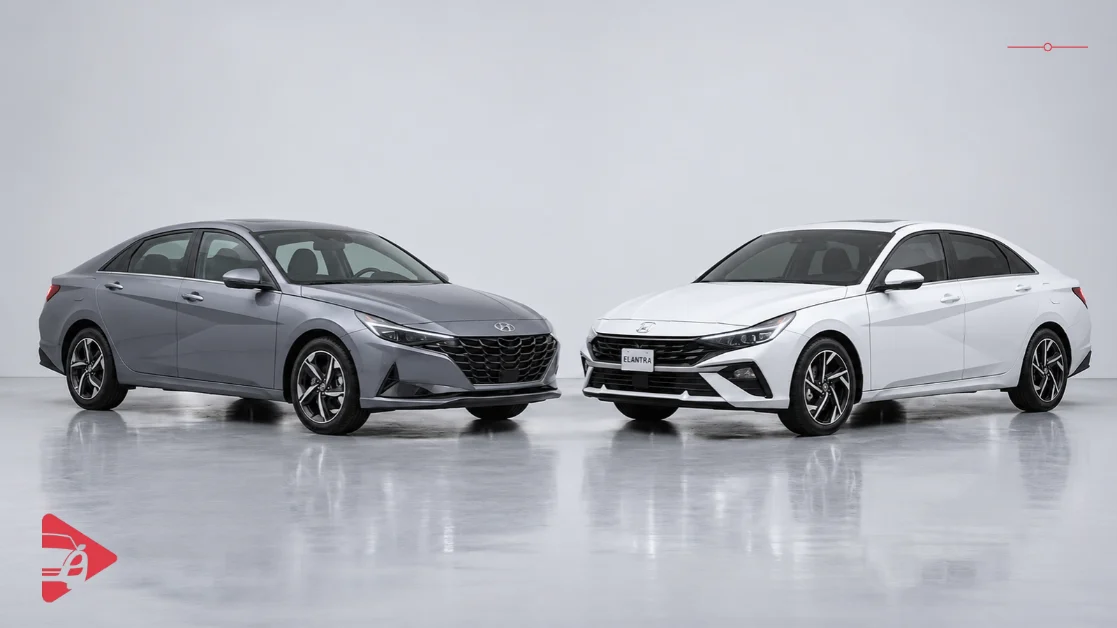
Avante Design
The Avante features a modern design that combines streamlined lines with a sporty character, with clear attention to improving aerodynamics and giving the car a more distinctive appearance.
The exterior design of modern generations is based on the parametric dynamics philosophy, characterized by sharp geometric lines and interwoven visual details.
Key design features include:
- A sporty front fascia.
- Modern headlights.
- Sharp, streamlined side lines.
- A sloping roof that gives the car a sporty appearance.
- Distinctive rear light design.
- Alloy wheels with different designs depending on the trim.
Elantra Design
The Elantra offered in global markets features a design associated with the generation available locally. Modern versions are distinguished by a bold front fascia, prominent side lines, and a sporty appearance.
Key exterior design elements include:
- LED headlights on equipped trims.
- A sporty front grille.
- Streamlined side lines.
- Distinctive rear lights.
- Sporty wheels in different sizes.
- Multiple exterior color options.
Does the Avante Look Different from the Elantra?
If both cars are from the same generation and have corresponding regional specifications, their basic designs will be largely similar.
However, differences may appear in details such as the bumper, wheel, lighting, badge, and exterior equipment designs.
If the Avante is from a newer generation than the Elantra offered in another market, the differences will be greater, because this would be a comparison between two different generations rather than merely two names.
Comparing the Dimensions and Interior Space of the Avante and Elantra
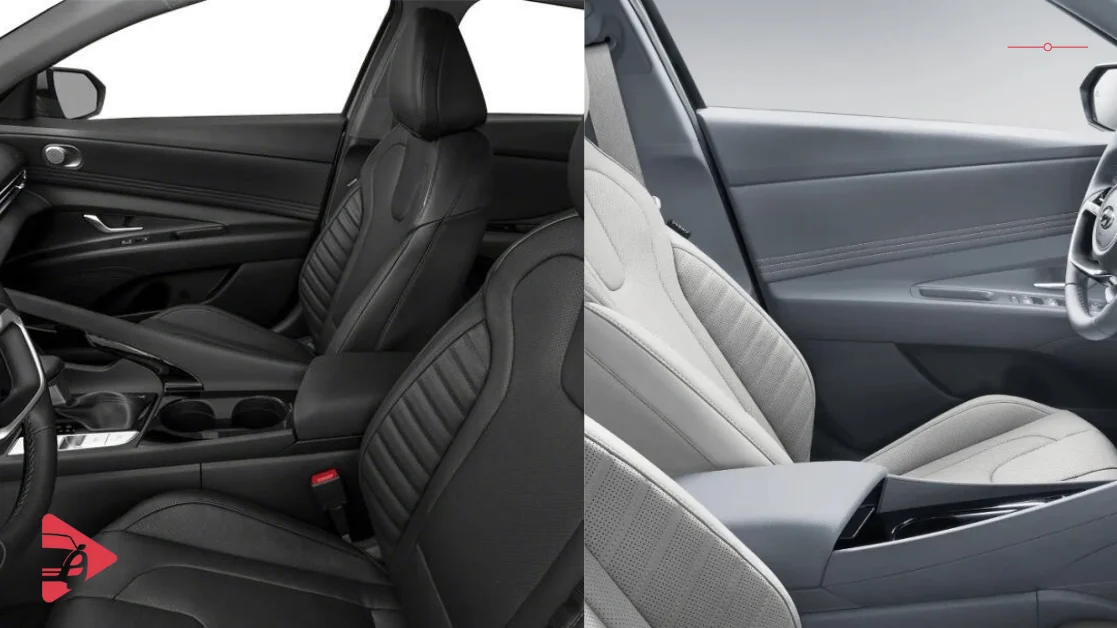
Dimensions are important factors when choosing a sedan because they affect rear-passenger space, ease of entry and exit, and trunk capacity.
According to Hyundai Avante data, the dimensions are as follows:
| Item | Avante 2026 |
|---|---|
| Length | 4,675 mm |
| Width | 1,825 mm |
| Height | 1,430 mm |
| Ground clearance | 150 mm |
| Trunk capacity | 407–420 liters |
| Number of seats | 5 seats |
These dimensions indicate that the car offers a suitable size for daily use and family transportation.
Avante Interior Space
The interior features a practical design that provides suitable space for the driver and passengers, with attention to comfort during long journeys.
Key strengths include:
- Comfortable seating for five people.
- Suitable second-row passenger space.
- A modern dashboard design.
- Multiple storage spaces.
- A trunk suitable for family use.
Interior Space in the Saudi Elantra
The Elantra in Saudi Arabia offers a practical cabin that combines comfort with technological equipment.
Available interior equipment varies by trim and includes:
- Two 10.25-inch screens integrated under a single glass panel on some trims.
- A power-adjustable driver’s seat on the top trim.
- Lumbar support for the driver’s seat.
- Ventilated front seats on some trims.
- A leather-wrapped steering wheel and gear lever on higher trims.
- A USB-C charger.
- Automatic climate control on advanced trims.
Which Is Better in Terms of Space?
The Avante and Elantra share the same basic engineering concept, but preference cannot be determined by name alone.
It is preferable to compare the dimensions of the specific generation, rear-seat space, and trunk capacity, especially if you are looking for a family car.
The Difference Between the Avante and Elantra in Engines and Performance
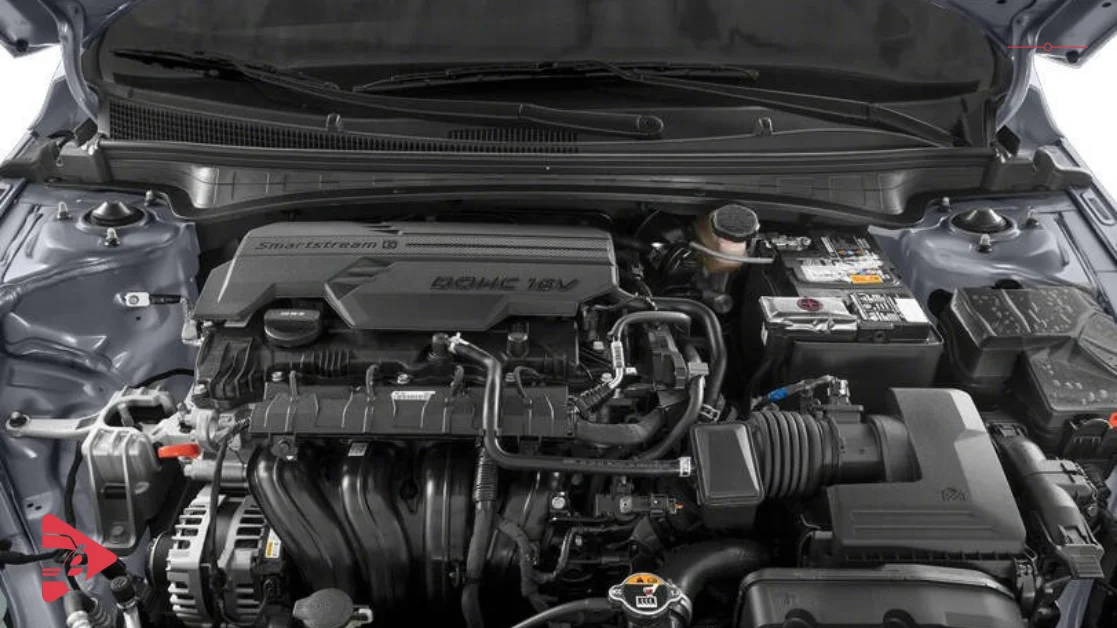
The engine is one of the most important elements to compare when buying a new or used car, especially since Hyundai offers different powertrain options depending on the market.
Hyundai Elantra Engines
The Elantra is available with 1.5-liter and 2.0-liter gasoline engines, both equipped with an IVT continuously variable transmission.
1.5-Liter Gasoline Engine
- Engine type: Gasoline.
- Displacement: 1.5 liters.
- Maximum power: 113 hp.
- Maximum torque: 144 Nm.
- Transmission: IVT.
- Drive system: Front-wheel drive.
- 0–100 km/h acceleration: 10.4 seconds.
This engine is suitable for those seeking an economical car for daily use and urban driving, with performance that meets normal driving requirements.
2.0-Liter Gasoline Engine
- Engine type: Gasoline.
- Displacement: 2.0 liters.
- Maximum power: 157 hp.
- Maximum torque: 191 Nm.
- Transmission: IVT.
- Drive system: Front-wheel drive.
- 0–100 km/h acceleration: 9 seconds.
This engine delivers greater power and better responsiveness, making it suitable for those who want livelier performance in urban driving and on highways.
Avante Engines
The Avante lineup includes several options, including:
1.6-Liter LPI Engine
It runs on liquefied petroleum gas and is offered among the options designated for certain markets. It aims to provide suitable operating costs depending on fuel availability and local infrastructure.
1.6-Liter Smartstream Gasoline Engine
- Fuel type: Gasoline.
- Displacement: 1,598 cc.
- Transmission: Automatic.
- Power within the published data range for the trims: Varies by version.
1.6-Liter Hybrid Gasoline Engine
It combines a gasoline engine with an electric motor and aims to reduce fuel consumption and improve efficiency, particularly during urban driving.
Engine and Performance Comparison
| Item | Elantra | Avante |
|---|---|---|
| Base engine | 1.5 liters | 1.6 liters |
| More powerful engine | 2.0 liters | 1.6-liter hybrid |
| Power | 113 or 157 hp | Varies by version |
| Transmission | IVT | Automatic |
| Drive system | Front-wheel drive | Front-wheel drive |
| Fuel type | Gasoline | Gasoline, hybrid, or LPI |
What About the Elantra N?
Hyundai also offers the high-performance Elantra N, which differs from the standard trims in terms of its engine characteristics and sporty equipment.
It comes with a 2.0-liter turbocharged engine and is aimed at drivers seeking stronger sporty performance and a more aggressive driving experience.
It should be noted that the availability of this version in Saudi Arabia is subject to confirmation by the local dealer, as it is not included among the standard GL, GL+, GLS, and LTD trims.
The Difference Between the Avante and Elantra in Fuel Consumption
Many buyers look for an economical car that offers low daily operating costs. This is where comparing gasoline and hybrid engines becomes important.
Avante Fuel Consumption
According to 2026 Hyundai Avante data, fuel consumption ranges from 12 to 16 kilometers per liter, depending on the version and powertrain.
The hybrid version provides a suitable option for those wishing to reduce fuel consumption, particularly in urban driving conditions.
Elantra Fuel Consumption
Fuel consumption in the Saudi Elantra depends on the engine used, whether the 1.5-liter or 2.0-liter engine, as well as driving conditions and road conditions.
Factors affecting consumption include:
- Engine displacement.
- Transmission type.
- Vehicle weight.
- Driving style.
- Use of the air conditioner.
- Traffic congestion.
- Tire condition and regular maintenance.
Is the Avante More Economical Than the Elantra?
Neither has a fixed advantage based on its name. Fuel economy depends on the specific engine.
The Avante hybrid may be more economical than conventional gasoline versions under suitable operating conditions, while the Elantra 1.5-liter engine may be a suitable option for those focused on daily operating costs.
For an accurate comparison, review the official consumption data for each trim according to the testing cycle approved in the relevant country.
Interior and Technology Comparison
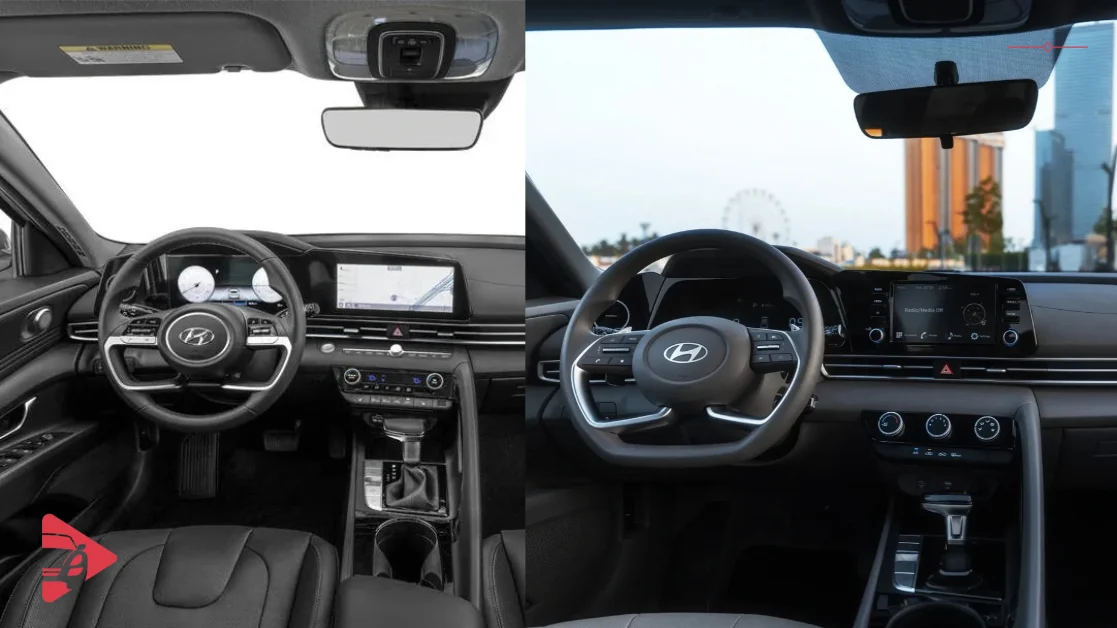
Technology in the Saudi Elantra
The Elantra available in Saudi Arabia offers a range of technologies focused on comfort and ease of use.
Key equipment available by trim includes:
- Two 10.25-inch screens on some trims.
- A digital instrument cluster.
- An advanced infotainment system.
- Apple CarPlay and Android Auto support.
- An integrated voice-recognition system.
- A wireless phone charger.
- USB-C ports.
- A power-adjustable driver’s seat on the top trim.
- Automatic climate control on advanced trims.
These features provide a more comfortable driving experience, especially for those who spend a long time inside the car.
Technology in the Avante
Avante equipment varies according to the version and market, but modern generations include a range of digital and entertainment technologies.
Features that may be available include:
- Digital information and entertainment screens.
- A central touchscreen.
- Smartphone connectivity support.
- Wireless phone charging.
- A navigation system on some trims.
- A multi-speaker audio system.
- Vehicle connectivity and control systems, depending on equipment.
Which Is Better in Technology?
Neither car has an absolute advantage because the level of technology is linked to the trim and generation.
However, the Saudi Elantra LTD stands out with advanced interior equipment, including a 10.25-inch instrument display and an infotainment screen of the same size, along with a power seat and additional comfort features.
The Avante’s equipment, meanwhile, varies according to whether it is a Korean, Gulf, or imported version.
Safety and Driver-Assistance Systems Comparison
Hyundai places significant emphasis on developing safety systems, and many driver-assistance technologies are now available in its modern vehicles.
Safety Systems in the Saudi Elantra
The Elantra’s equipment includes a range of Hyundai SmartSense systems on equipped trims.
Key systems include:
Forward Collision-Avoidance Assist FCA
It monitors the road ahead and warns the driver when a collision risk is detected. It can apply emergency braking when necessary.
Blind-Spot Collision-Avoidance Assist BCA
It helps detect vehicles in areas invisible to the driver and intervenes when there is a risk during lane changes or while leaving a parking space.
Lane Following Assist LFA
It helps keep the car in the center of the lane by gradually steering when necessary.
Lane Keeping Assist LKA
It alerts the driver when the vehicle leaves its lane without using the turn signal and helps guide the car back.
Smart Cruise Control SCC
It helps maintain a safe distance from the vehicle ahead while adjusting speed according to traffic conditions.
Electrochromic Rearview Mirror ECM
It automatically reduces the reflection of headlights from vehicles approaching from behind, providing more comfortable visibility during night driving.
It should be noted that some of these features are available only on higher trims and should not be assumed to be present on all Elantra versions.
Safety Systems in the Avante
Avante safety systems vary according to the trim and market and may include:
- Anti-lock braking system ABS.
- Multiple airbags.
- Electronic stability control.
- Forward collision-avoidance assist.
- Lane-keeping assist.
- Blind-spot monitoring.
- Parking sensors.
- Rear-view camera.
Which Is Better in Safety?
Both cars offer a range of advanced safety technologies, but the correct comparison depends on the number of airbags and assistance systems available in the specific trim.
It is best to review the official equipment list before buying, especially if the car was imported from a different market.
Comfort, Driving, and Daily Use Comparison
Both the Avante and Elantra target people who want a practical sedan for daily use, whether for urban travel or highway driving.
Comfort in the Avante
The Avante offers a practical and comfortable cabin, with equipment varying according to the trim.
Key comfort features include:
- Seats suitable for daily trips.
- Good interior space.
- An air-conditioning system.
- Phone-charging options.
- Driver-assistance systems.
- Sound insulation that varies according to the trim and version.
Comfort in the Saudi Elantra
The Elantra provides a range of features that enhance driver and passenger comfort.
These include:
- A power-adjustable driver’s seat on the top trim.
- Lumbar support.
- Ventilated front seats on some trims.
- Automatic climate control.
- Reduced noise and vibration.
- An improved suspension system.
- A wireless phone charger.
Hyundai Al-Naghi also indicates that improvements have been made to door and glass insulation and suspension rigidity to provide a quieter and smoother drive.
Which Is More Suitable for Families?
Both are suitable for small families, but you should test the rear seats and check the trunk capacity before buying, especially if the car will be used daily with more than one passenger.
Avante and Elantra Prices in Saudi Arabia
Price is one of the most important factors affecting a purchase decision, particularly when comparing versions available in different markets.
However, it is essential to note that the following prices apply to different markets and trims and do not represent a direct price comparison between two identical cars.
Hyundai Elantra Prices in Saudi Arabia
Elantra prices start at SAR 86,694 and vary according to the engine and trim. The trims and prices are as follows:
| Trim | Engine | Price in Saudi riyals |
|---|---|---|
| 1.5 GL | 1.5 liters | 86,694 |
| 1.5 GL+ | 1.5 liters | 90,204 |
| 2.0 GL | 2.0 liters | 90,204 |
| 2.0 GL+ | 2.0 liters | 92,544 |
| 1.5 GLS | 1.5 liters | 94,884 |
| 2.0 GLS | 2.0 liters | 97,224 |
| 2.0 LTD | 2.0 liters | 108,924 |
The list shows that buyers have multiple options, starting with the basic GL trims and extending to the top LTD trim.
Hyundai Elantra cars for sale in Saudi Arabia
Hyundai Avante Prices
Hyundai Avante prices vary according to the engine, trim, and equipment. Prices start at approximately SAR 55,900 for the LPI version with a 1.6-liter engine and reach approximately SAR 70,250 for the 1.6 Smartstream Gasoline version, while the 1.6 hybrid version costs approximately SAR 130,000. These differences reflect variations in operating systems and available technologies. Prices may also vary according to the trim, offers, and registration costs.
Avante cars for sale in Saudi Arabia
Main Differences Between Saudi Elantra Trims
GL Trim
This is the base trim and offers practical equipment, including a gasoline engine and CVT or IVT transmission, depending on the terminology used, along with 16-inch aluminum wheels.
GL+ Trim
It adds some comfort features, such as power-folding exterior mirrors, a smart key, push-button start, and wireless charging.
GLS Trim
It offers a higher level of equipment, including 17-inch aluminum wheels, LED rear lights, ventilated front seats, a sunroof, and an auto-dimming rearview mirror.
LTD Trim
This is the top trim in the lineup and adds advanced features such as:
- 10.25-inch instrument display.
- 10.25-inch infotainment screen.
- Power-adjustable driver’s seat.
- Lumbar support.
- Automatic front climate control.
- Side and curtain airbags.
- Forward collision warning system.
2026 Hyundai Avante Prices in the UAE
Published prices for the 2026 Avante range from SAR 55,900 to SAR 130,000, depending on the version and powertrain.
The main options are as follows:
| Trim | Engine | Fuel type | Price |
|---|---|---|---|
| LPI 1.6 | 1.6 liters | Liquefied petroleum gas | 55,900 |
| Smartstream Gasoline 1.6 | 1.6 liters | Gasoline | 73,250 |
| Gasoline 1.6 Hybrid | 1.6 liters | Hybrid | 130,000 |
Equipment varies between trims. Some options include multiple airbags, cruise control, ABS, smart entry, parking sensors, and wireless charging.
Is the Avante Cheaper Than the Elantra?
This cannot be determined by directly comparing the previous figures because the prices are in different currencies and the vehicles offered differ in terms of engines and equipment.
The Korean LPI version also differs from the Saudi gasoline version, while the hybrid version differs from both in terms of its powertrain and cost.
Therefore, you should compare the vehicle price after currency conversion and account for taxes, fees, equipment, and local warranty coverage.
Avante Advantages
- Modern design combining elegance with a sporty character.
- Multiple engine options depending on the market.
- Availability of hybrid versions.
- Availability of an LPI version in some markets.
- Multiple technology and entertainment features.
- Advanced safety systems depending on the trim.
- Suitable for daily use and family transportation.
- Good balance between performance and comfort.
Elantra Advantages
- Wide availability in many markets.
- Parts and maintenance availability in many countries.
- Multiple engine and trim options.
- Modern and sporty design.
- Practical cabin suitable for daily use.
- Advanced safety and assistance systems depending on the trim.
- Comfort features such as ventilation and wireless charging on higher trims.
- Dealer and after-sales service networks in many countries.
Is the Korean Avante Better Than the Saudi Elantra?
This question is particularly important for people considering buying a Hyundai imported from South Korea instead of purchasing an Elantra from the local dealer.
The answer depends on the specifications, model year, and vehicle condition, not on the name.
When Is the Korean Avante a Better Choice?
The Korean Avante may be suitable if:
- You are looking for an engine or powertrain unavailable locally.
- You want a hybrid or LPI version according to your needs.
- You find additional equipment that suits your use.
- You obtain a competitive import price.
- You confirm that the car can be serviced and its parts supplied locally.
When Is the Saudi Elantra Better?
The Elantra available from the local dealer may be more suitable if:
- You want clear local warranty coverage.
- You value ease of maintenance.
- You want parts to be regularly available.
- You prefer specifications approved in Saudi Arabia.
- You are looking for specific trims such as GL, GL+, GLS, and LTD.
- You want to benefit from local after-sales services and offers.
Before buying an imported Avante, it is important to verify the VIN, manufacturing date, accident history, mileage, and compliance of the technical specifications with the requirements of the importing country.
Which Is Better, Avante or Elantra?
Since both cars belong to the same model, the choice mainly depends on the model year, generation, trim, engine, and market.
The choice can be summarized as follows:
Choose the Korean Avante if:
- You want different engine options.
- You prefer hybrid or LPI versions.
- You find equipment that suits your needs.
- You obtain a suitable price after calculating all import costs.
Choose the Saudi Elantra if:
- You want a car with a local dealer warranty.
- You value ease of maintenance and parts availability.
- You prefer specifications approved in Saudi Arabia.
- You want to choose between 1.5-liter and 2.0-liter engines.
- You find a suitable offer among the GL, GL+, GLS, or LTD trims.
If both cars are from the same generation and have the same engine and equipment, neither has a significant advantage over the other merely because of the difference in name.
Important Tips Before Buying an Avante or Elantra
Before making a purchase decision, it is best to consider several points that may affect the long-term cost of ownership:
- Determine the model year: Do not rely only on the car’s name; verify the generation and manufacturing date.
- Inspect the engine: Check the engine’s condition for leaks or unusual sounds.
- Inspect the transmission: Ensure that the IVT or automatic transmission operates smoothly.
- Review the maintenance history: This is especially important for used or imported cars.
- Verify the specifications: Compare the airbags, safety systems, and interior equipment.
- Check the VIN: Use the VIN to verify the vehicle’s information and history as much as possible.
- Compare warranties: Check warranty coverage and whether it is accepted by the local dealer.
- Calculate operating costs: Consider fuel consumption, maintenance, insurance, and parts.
- Take a test drive: Test the car on the roads you normally use.
- Obtain an independent inspection: Do not rely solely on the seller’s statements when buying a used car.
Frequently Asked Questions
Is the Avante the Same as the Elantra?
Yes. Avante and Elantra are names for the same Hyundai model. The company uses the name Avante in South Korea and Elantra in most international markets.
Why Is the Car Called Avante in Korea and Elantra in Other Countries?
This is related to Hyundai’s regional marketing strategy, under which the company uses different names for the same model according to the target market.
Does the Avante Have a Different Engine from the Elantra?
Available engines may differ according to the country, model year, and trim. In Saudi Arabia, the Elantra is available with a 1.5-liter engine producing 113 hp and a 2.0-liter engine producing 157 hp according to the listed specifications, while the Avante is available in the UAE with options including 1.6-liter gasoline, hybrid, and LPI engines.
Is the Korean Avante Better Than the Saudi Elantra?
Not necessarily. The Korean Avante may offer different equipment or engine options, while the Saudi Elantra benefits from locally suitable specifications, warranty coverage, and dealer services.
How Much Does the Hyundai Elantra Cost in Saudi Arabia?
Hyundai Elantra prices start at SAR 86,694 for the 1.5 GL trim and reach SAR 108,924 for the 2.0 LTD trim, according to the price list available when this comparison was prepared.
How Much Does the Hyundai Avante Cost?
Avante prices range from SAR 60,900 to SAR 130,000, depending on the trim. Options include the 1.6 LPI, 1.6 Smartstream Gasoline, and 1.6 hybrid versions.
Are Avante Parts the Same as Elantra Parts?
In many cases, the basic mechanical parts are shared between corresponding versions from the same generation. However, some electronic, exterior, and interior parts may differ according to the market and trim. It is therefore preferable to verify compatibility using the VIN.
Does the Avante Have Different Fuel Consumption from the Elantra?
There is no fixed difference based on the name. Fuel consumption depends on the engine, transmission, weight, equipment, and driving conditions.
Is a Hybrid Avante Available?
Yes. Hybrid Avante versions are available in some markets, and hybrid Elantra versions are also available in several global markets. Availability varies by country.
Can the Korean Avante Be Imported into Saudi Arabia?
This depends on the import regulations and the technical and environmental specifications approved in the Kingdom. Import, registration, and warranty requirements should be reviewed before purchasing the vehicle.
What Is the Difference Between the Avante N and Elantra N?
Both names refer to the high-performance sports version of the Hyundai N family. The company uses the name Avante N in Korea and Elantra N in global markets, with possible differences in regional specifications.
Which Is Better for Daily Use in Saudi Arabia?
The Elantra available from the local dealer is a practical choice for those concerned with warranty, maintenance, and parts availability, while an imported Avante may suit buyers seeking an engine or equipment unavailable locally.
Conclusion: Is There a Real Difference Between the Avante and Elantra?
After reviewing the difference between the Avante and Elantra, it becomes clear that the two cars are not separate models but different names for the same Hyundai compact sedan. The real differences lie in regional specifications, engines, trims, equipment, and prices.
In Saudi Arabia, Hyundai Al-Naghi offers the Elantra with 1.5-liter and 2.0-liter gasoline engines, with multiple trims ranging from GL to LTD and prices starting at SAR 86,694. The Avante lineup includes 1.6-liter gasoline, LPI, and hybrid options, with prices ranging from SAR 58,900 to AED 133,000 depending on the trim.
In terms of equipment, the Saudi Elantra offers various features such as dual screens, ventilated seats, wireless charging, and Hyundai SmartSense systems on some trims.
The Avante, meanwhile, stands out for the variety of options available in some markets, particularly for buyers seeking a hybrid powertrain or alternative operating options.
Ultimately, neither name can be considered absolutely better than the other. If both cars are from the same generation and have the same specifications, they are practically the same car. However, when the generation, engine, or equipment level differs, the technical and price comparison becomes the deciding factor.