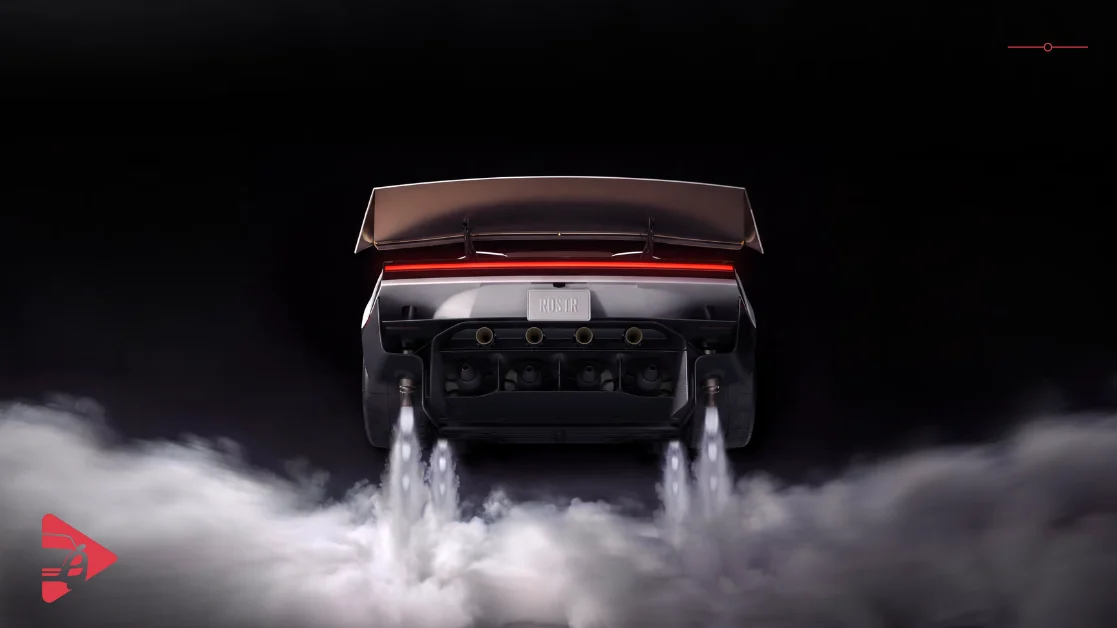
How can a car like the Tesla Roadster accelerate with tremendous force, adhere to an inverted track, and then leap into the air? The secret lies in combining electric motors with a propulsion system powered by compressed gas, along with fans that generate suction beneath the car to enhance its grip on the surface. Rather than relying solely on the tires to maintain traction, the Roadster uses technologies inspired by aerospace and rocket engineering to deliver exceptional capabilities that go beyond what we see in conventional electric cars.
The idea behind the Roadster’s jets is to release compressed gas through directed nozzles, generating thrust as a result of the change in the gas’s momentum, in accordance with the principle of action and reaction. At the same time, the fan system helps generate downforce or suction that keeps the car in contact with the track. However, this technology does not mean that the car has become an aircraft in the traditional sense, as short jumps and limited aerial maneuvers differ from sustained flight, which requires a suitable lift and control system.
So how does this technology work? What is its relationship with tires, traction, and acceleration? And can the Roadster really fly? In this article from Carsvid, we explore the engineering details behind one of the most exciting ideas in the world of sports cars.

What Are Tesla Roadster Jets?
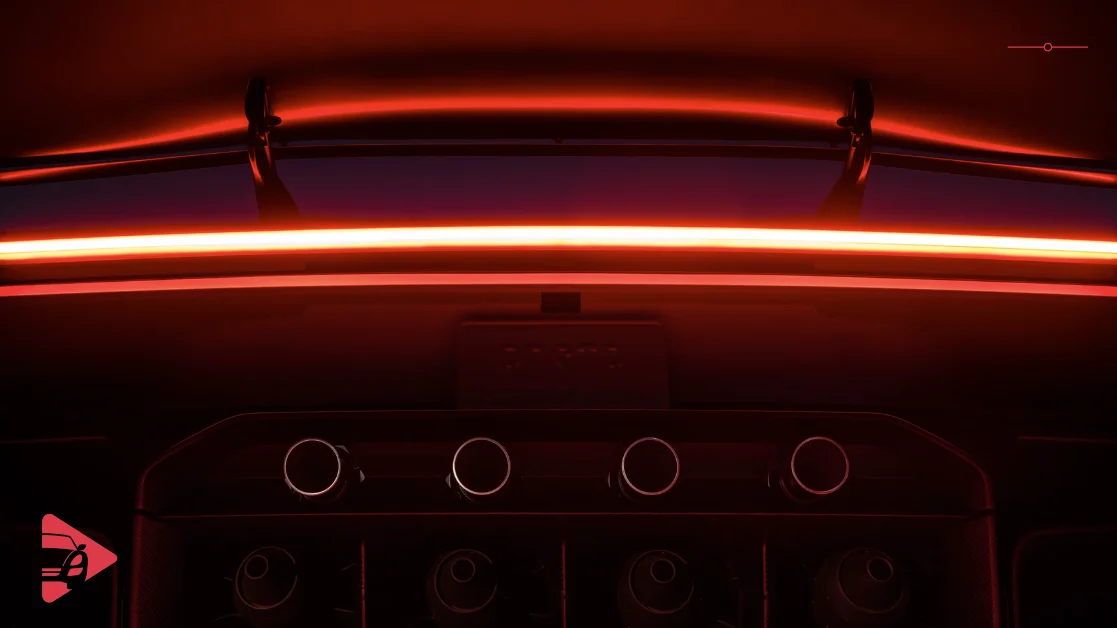
In the context of the Tesla Roadster, the term jets refers to thrust nozzles that use compressed gas to generate mechanical force in a specific direction. Unlike a conventional jet engine, which typically relies on drawing in and compressing air and burning fuel inside it, a cold-gas propulsion system can operate by releasing gas stored under high pressure without combustion inside the nozzle.
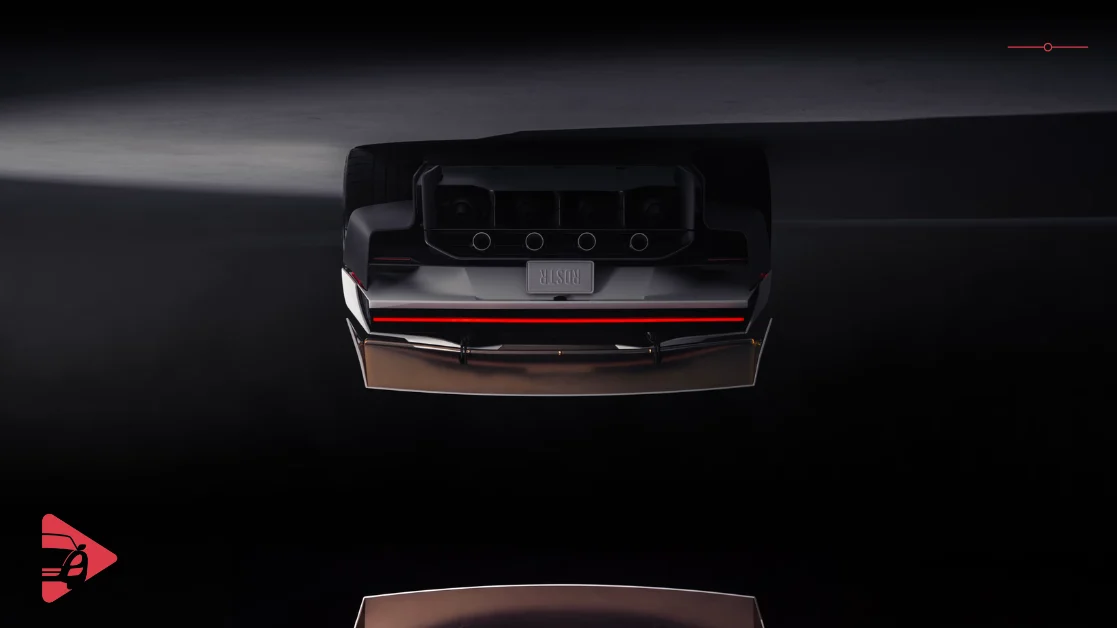
In the new Roadster showcased by Tesla in October 2026, propulsion technology inspired by systems developed by SpaceX appeared alongside a fan system that generates suction beneath the body. The demonstration showed the car performing maneuvers that included driving on an inverted track, leaping into the air, and rotating before landing.
The importance of the concept lies in its combination of three different systems:
- Electric motors: To power the car and turn the wheels in the usual way used by electric vehicles.
- Compressed-gas jets: To produce powerful, temporary bursts that assist with acceleration, maneuvering, and changing the direction of motion.
- Underside suction system: To enhance the car’s adhesion to surfaces under specific conditions, even when the vehicle’s speed is insufficient to generate significant aerodynamic downforce.
It is important not to confuse these systems. The jets are not a complete substitute for the electric motors, and the fans do not perform the same function as the tires. Each system has a different role within the car’s engineering system.
How Do Roadster Jets Work Step by Step?
To understand how the system works, we must follow the path of the gas from storage until it exits the nozzles, and then understand how the resulting force is converted into controllable motion.
Storing Compressed Gas
The process begins with a tank designed to withstand high pressure and containing compressed gas, such as nitrogen, according to explanations published about the technology. The gas is stored inside a special pressure vessel, taking into account safety requirements related to pressure, temperature, and the materials used in manufacturing.
This tank represents the direct energy source for the jets. When the system opens the release valves, the gas is released and moves toward the nozzles, where its stored energy is converted into a rapid flow that generates thrust.
This approach differs from conventional rocket engines, which rely on burning fuel with an oxidizer to produce hot gases. Cold-gas propulsion, by contrast, does not require combustion inside the launch system itself.
Releasing Gas Through the Nozzles
When the gas is released from the tank, it passes through pipes and valves until it reaches directed nozzles. Directing the nozzles makes it possible to determine the direction of the resulting force, whether to push the car forward, help change its direction, or support a specific movement during a maneuver.
The resulting force depends on several factors, including gas pressure, flow rate, nozzle characteristics, and release duration. Therefore, simply having a large tank is not enough to ensure strong performance; all components must work together efficiently.
Generating Thrust According to the Principle of Action and Reaction
When gas exits the nozzle at high speed, it carries momentum in the direction of its release. As a result, an opposing force is generated that acts on the car.
The concept can be simplified with the example of a balloon: when air exits its opening in a particular direction, the balloon moves in the opposite direction. Roadster jets operate according to the same general physical principle, but use a more complex engineering system that allows the direction and timing of the flow to be controlled.
This force is particularly useful when the car needs an additional burst that the electric motors and wheels cannot provide alone within the usual design limits.
Controlling the Car’s Direction
The jets are not limited to producing forward force; they can also be distributed and directed to affect the car’s rotational motion.
When a force acts at a point far from the car’s center of mass, it may generate torque that causes the body to rotate. If these forces are coordinated properly, they can help change the car’s direction while it is in the air.
However, carrying out these maneuvers requires precise coordination between nozzle direction, gas-release timing, and the car’s condition. Any error in estimating the force or its timing could lead to unwanted rotation or loss of control.
What Is the Relationship Between Roadster Jets and Lower-Power Tires?
The article’s title may suggest that reducing tire force is what allows the car to launch into the air, but this is not the physical mechanism that explains how the system works.
Tires on sports cars are designed to provide the traction needed for acceleration, braking, and cornering. The greater the force the tires can transfer to the road within their design limits, the better the car can use engine torque without slipping, provided the tires are suitable for the road conditions and their temperature.
What distinguishes Roadster technology is its attempt to reduce exclusive reliance on traction resulting from conventional contact between the tire and the road by adding auxiliary systems.
What Is the Difference Between Traction, Downforce, and Suction?
Tire-generated traction: This is the tire’s ability to transfer forces between the car and the road. It is affected by the type of rubber, temperature, surface condition, and loads acting on the tire.
Aerodynamic downforce: This results from the interaction of air with the body and wings while the car is moving. It can increase the force pressing the tires toward the road, improving traction within suitable limits.
Fan-generated suction: This relies on a system that draws air from the area beneath the car, reducing the pressure there compared with the external pressure. The pressure difference helps push the car toward the surface.
The Roadster uses the third concept to enhance its adhesion to the track, even under conditions in which conventional downforce is insufficient. In principle, this technology could help the car remain connected to an inverted track if the holding force is sufficient to counterbalance its weight and the other forces acting on it.
Thus, referring to “lower-power tires” does not mean that weak tires make the car fly. Rather, the key idea is to add another engineering method for generating holding force instead of relying solely on conventional traction.
How Can the Roadster Drive Upside Down?
Driving on an inverted surface is one of the most interesting applications because it challenges the usual concept that links a car’s remaining on the road to its weight and the pressure of its tires on the ground.
In the conventional case, gravity helps keep the car on the road, while traction ensures that motion forces are transferred through the tires. But when the track becomes inverted, gravity acts in the direction that pushes the car away from the surface, so an additional force is needed to prevent it from separating.
This is where the underside suction system comes in. The fans reduce the pressure beneath the body, creating a pressure difference that generates a force toward the surface. If this force is sufficient, the car can maintain contact with the track despite the reversal of its direction.
This does not mean that the car can drive upside down on any surface or under any conditions. The outcome depends on the track design, the capacity of the suction system, the seal around the underside, and control of the car’s movement. The system’s performance in a demonstration does not automatically prove its suitability for use on public roads.
Can the Tesla Roadster Really Fly?
The answer depends on what is meant by flying. If it means leaving the surface, rising into the air briefly, changing direction, and landing, directed propulsion systems can, in principle, help perform this movement. If it means sustained flight over long distances like an aircraft, that requires different and more complex engineering requirements.
The car does not necessarily have wings that generate sustained lift, nor does it use conventional lift fans like a helicopter. Instead, the demonstrated technology relies on bursts of compressed gas to generate short-duration forces that can affect the car’s movement while it is in the air.
This method imposes important limitations, most notably the amount of gas available, the duration for which thrust can be maintained, the ability to control the car’s attitude, and the energy required to slow the descent.
For this reason, describing the car as an “aircraft” requires distinguishing between short aerial maneuvers and a vehicle capable of sustained, independent flight. What Tesla demonstrated represents a striking application of propulsion and control technologies, but it does not mean that the car has become a practical alternative to aircraft.
What Is the Difference Between the Roadster’s Electric Motor and Jet System?
Although the two systems work together, they differ in the source of their force and the way it is transferred to the car. The following table explains the difference between the Roadster’s electric motor and jet system:
| Comparison | Electric Motor | Compressed-Gas Jets |
|---|---|---|
| Energy source | Electric battery | Gas stored under pressure |
| Method of generating force | Generating torque to drive the wheels | Releasing gas through directed nozzles |
| Primary use | Daily driving and acceleration | Additional bursts and special maneuvers |
| Continuity | Can operate as long as energy is available and operating conditions are suitable | Limited by the amount of gas and its rate of consumption |
| Relationship with the road | Relies on the tires to transfer driving force | Can generate force without directly relying on tire contact with the road |
This comparison shows that the jet system does not eliminate the need for the car’s electric motor. The electric motor remains responsible for normal driving, while the jets add special capabilities unavailable in conventional electric cars.
What Are the Main Advantages of Roadster Jet Technology?
The most notable advantage is the ability to generate force directly through compressed gas, with the possibility of directing it according to the required maneuver. This idea opens the door to developing new control systems that combine ground movement, aerodynamic effects, and directed propulsion.
Potential advantages include:
- Producing powerful bursts over short periods: The jets can help generate additional force beyond what the wheel system alone can provide under specific conditions.
- Controlling movement during jumps: Directing the forces and timing their release can affect the car’s direction and attitude while it is in the air.
- Reducing reliance on conventional traction in some maneuvers: The jets can generate force even when the tires are not in contact with the surface.
- Developing new engineering technologies: Experiments may contribute to improving control systems, materials, pressure management, and system integration within vehicles.
Nevertheless, these advantages remain linked to the system’s design and the nature of the task, and do not necessarily mean that the car will be more efficient or safer in daily driving.
Will Roadster Jets Change the Future of Sports Cars?
It is too early to consider this technology a trend that will become common in sports cars, but it reveals new possibilities for integrating propulsion and control systems inspired by the aviation and aerospace sectors.
Projects like these may encourage engineers to rethink how downforce is generated, how vehicle attitude is controlled, and how auxiliary propulsion systems can be used. Experiments may also improve understanding of lightweight materials, pressure management, and the integration of electronic and mechanical systems.
However, the future of sports cars will remain tied to practical factors such as efficiency, energy consumption, cost, reliability, safety, and compliance with legal regulations. It is not enough for a car to perform an impressive maneuver to make it suitable for large-scale commercial production.
Electric motors, electronic control systems, and advanced aerodynamics will likely continue to play the biggest role in developing high-performance cars, while compressed-gas propulsion technologies remain a specialized option until their practical viability is proven on a broader scale.
Frequently Asked Questions
How do Tesla Roadster jets work?
Tesla Roadster jets work by releasing compressed gas through directed nozzles to generate thrust according to the principle of action and reaction. The system works alongside the electric motors and can help perform special bursts and maneuvers, while the car also uses a fan system to generate suction beneath the body and enhance its adhesion to the surface.
Can the Tesla Roadster fly like an aircraft?
Directed propulsion systems can help the car leave the surface and perform short jumps or aerial maneuvers. However, this differs from sustained flight like that of aircraft, which requires a system capable of providing lift and control throughout the journey.
Does the Tesla Roadster use a conventional jet engine?
Using jets does not mean that the car is equipped with a conventional turbine engine like those used in aircraft. The system demonstrated by Tesla relies on propulsion inspired by SpaceX technologies, using compressed gas and launch nozzles. The electric motors remain responsible for driving the wheels and moving the car during normal driving.
What is the function of the fans beneath the Roadster?
The fans draw air from the area beneath the car, reducing the pressure there compared with the external pressure. The pressure difference helps generate a force that pushes the car toward the surface, which can enhance traction and help it remain connected to an inverted track under designed conditions.
Do Roadster jets make tires less important?
The jets do not eliminate the importance of the tires. They remain essential for transferring acceleration, braking, and steering forces during road driving. However, directed propulsion and suction systems add other ways to generate forces, reducing reliance on conventional contact in some special maneuvers. This does not mean that reducing tire traction necessarily improves the car’s performance.
Can Roadster jet technology be used in ordinary cars?
Some engineering principles related to force direction, control, and pressure can be used in specialized applications, but transferring the jet system itself to a daily car would face challenges related to weight, cost, safety, gas consumption, and complexity.
In Short
Roadster jets reveal an unconventional direction in the world of sports cars, combining electric propulsion, compressed gas, and underside suction to achieve maneuvers beyond the capabilities of conventional cars. The concept relies on directing forces rather than depending solely on what the wheels and tires can provide, while using an auxiliary system to enhance the car’s adhesion to the surface under special conditions.
Nevertheless, the success of this technology in a demonstration does not mean that it is ready for daily use or that it can fly like an aircraft. There are challenges related to gas capacity, weight, control, safety, and legal approval.
For the future of cars, the importance of the Roadster lies in showing how technologies from different sectors can be combined to expand the limits of performance. Its commercial adoption, however, will depend on engineers’ ability to transform these exciting capabilities into practical, reliable, and safe solutions.