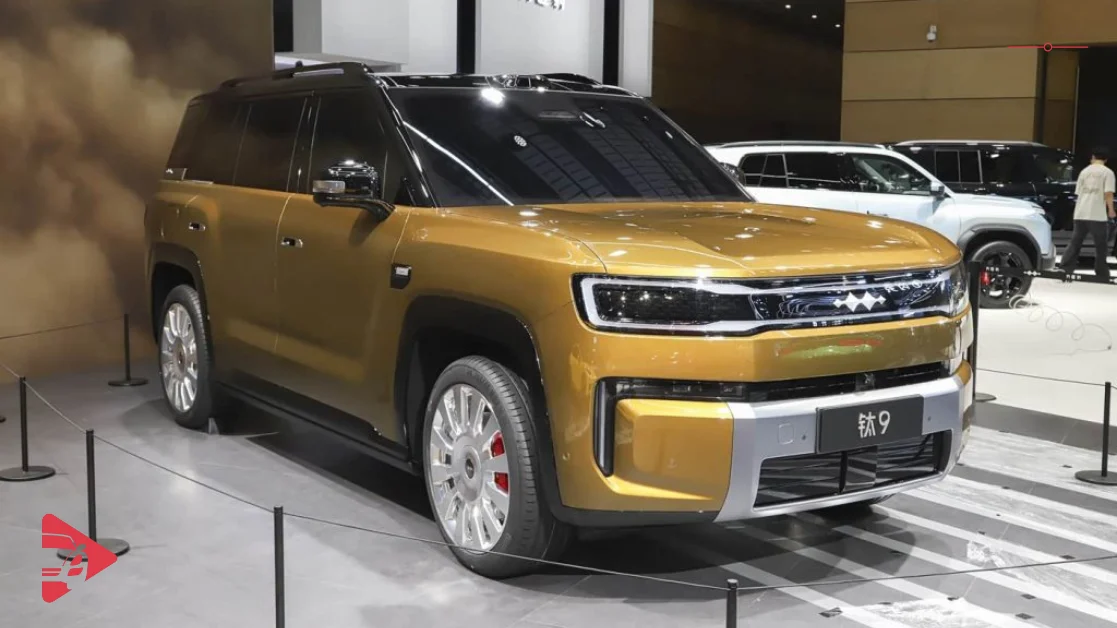
The new BYD Ti9 combines bold boxy styling with advanced family-oriented features in the large SUV segment, with a plug-in hybrid powertrain. It measures 5,270 mm long, 1,999 mm wide, and 1,850 mm high, with a 3,130-mm wheelbase and a cabin accommodating six passengers across three rows.
The vehicle relies on a 1.5-liter turbocharged gasoline engine producing 115 kW, along with two electric motors producing 200 kW each, providing all-wheel drive with a combined electric motor output of 400 kW. Energy comes from a lithium iron phosphate battery with a capacity of 66.48 kWh, offering an electric range of up to 310 kilometers according to the WLTC cycle, while the top speed exceeds 220 km/h.
In this review from CarsVid, we highlight the engineering specifications, powertrain, chassis technologies, and driver-assistance systems of the BYD Ti9, while analyzing its suitability for family use and long journeys, as well as the key factors that will determine its competitiveness in the large hybrid SUV segment.
BYD Cars for Sale in Saudi Arabia

New BYD Ti9 Specifications List
- Class: Large family SUV.
- Brand: Fang Cheng Bao, a BYD Group subsidiary.
- Power system: PHEV plug-in hybrid.
- Number of seats: 6 seats in the displayed version.
- Seat configuration: 2+2+2.
- Length: 5,270 mm.
- Width: 1,999 mm.
- Height: 1,850 or 1,880 mm.
- Wheelbase: 3,130 mm.
- Gasoline engine: 1.5-liter turbocharged.
- Maximum gasoline engine output: 115 kW, approximately 156 metric horsepower.
- Front electric motor: 200 kW, approximately 272 metric horsepower.
- Rear electric motor: 200 kW, approximately 272 metric horsepower.
- Battery type: Lithium iron phosphate LFP.
- Battery capacity: 66.48 kWh.
- Claimed electric range: 310 km according to WLTC.
- Claimed total range: More than 1,600 km.
- Top speed: 220 km/h.
- Curb weight: 2,865 or 2,965 kg depending on equipment.
- Maximum gross weight: 3,495 kg.
- Approach angle: 19 degrees.
- Departure angle: 22 degrees.
- Trailer towing capacity: Up to 2,000 kg according to registration data.
- Wheel sizes: 21 or 22 inches.
- Official price: Not announced.
Exterior Design: A Boxy Identity with a More Premium Presence
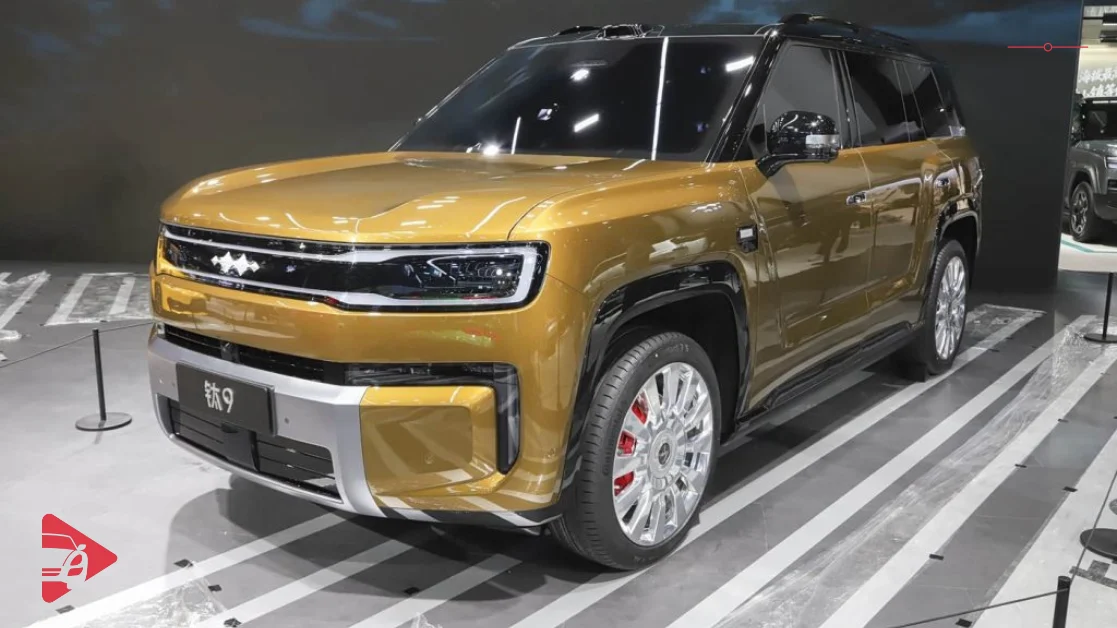
The BYD Ti9 adopts the boxy design that has become a distinctive feature of Chinese cars from the Fang Cheng Bao brand. However, it presents this identity in a more spacious and refined form, with a clear focus on family use and luxury rather than giving absolute priority to an off-road-oriented appearance.
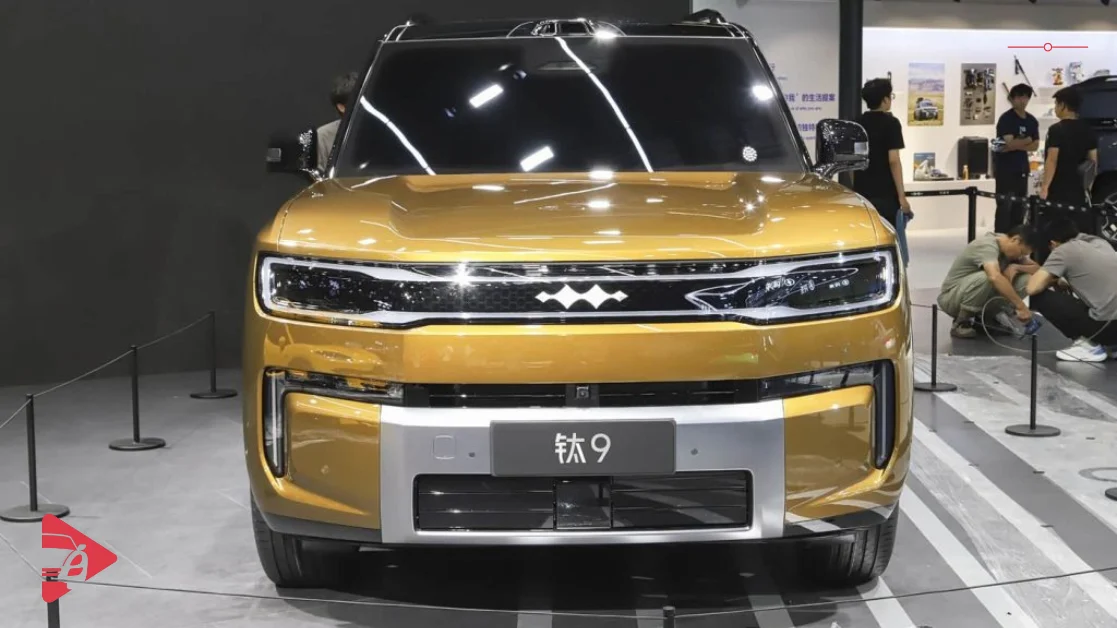
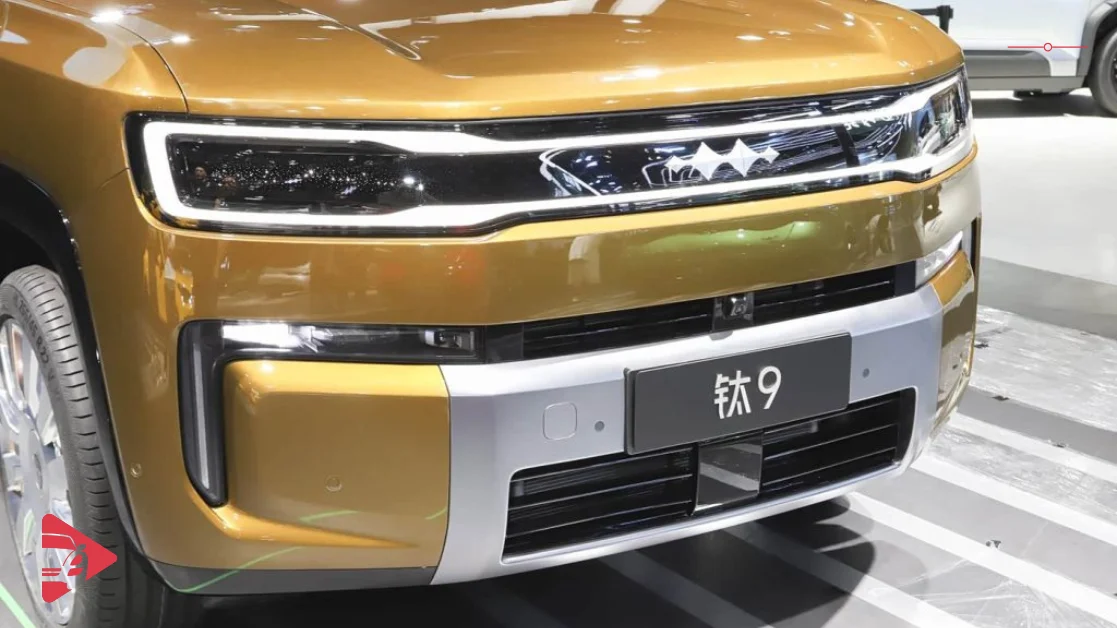
The front features a horizontal light strip extending across the vehicle and wrapping around the brand emblem in the center, while the main headlights integrate with the front design to give the vehicle a clearly modern appearance. The lower bumper stands out with a silver protective plate and black details that reinforce the impression of strength.
The front fascia also includes an active air grille that can open or close the air passages according to cooling requirements and operating conditions. This solution helps manage powertrain temperatures and improve aerodynamic efficiency when additional airflow is not required.
Another notable detail is the LiDAR sensor positioned above the windshield, indicating that the vehicle is equipped with an advanced driver-assistance system. However, the presence of this sensor alone is not enough to determine the available functions or automation level, as these details depend on the software, trim level, and target market.
Straight Side Lines and a High Roof
From the side, the vehicle features straight surfaces and prominent shoulders above the wheel arches, along with a high roof that helps provide suitable headroom for passengers in the rear rows.
The large doors make entry and exit easier, while the semi-hidden door handles add a modern touch to the design. Different exterior colors and trim options are available, including a contrasting black roof and optional roof rails.
The wheels are available in 21- and 22-inch sizes, with various designs and exterior equipment options. These choices give the vehicle an appearance suited to its large class, although their effect on ride comfort and energy consumption will also depend on the type and pressure of the tires and the suspension settings.
Rear Design: A Split Tailgate for Easier Use
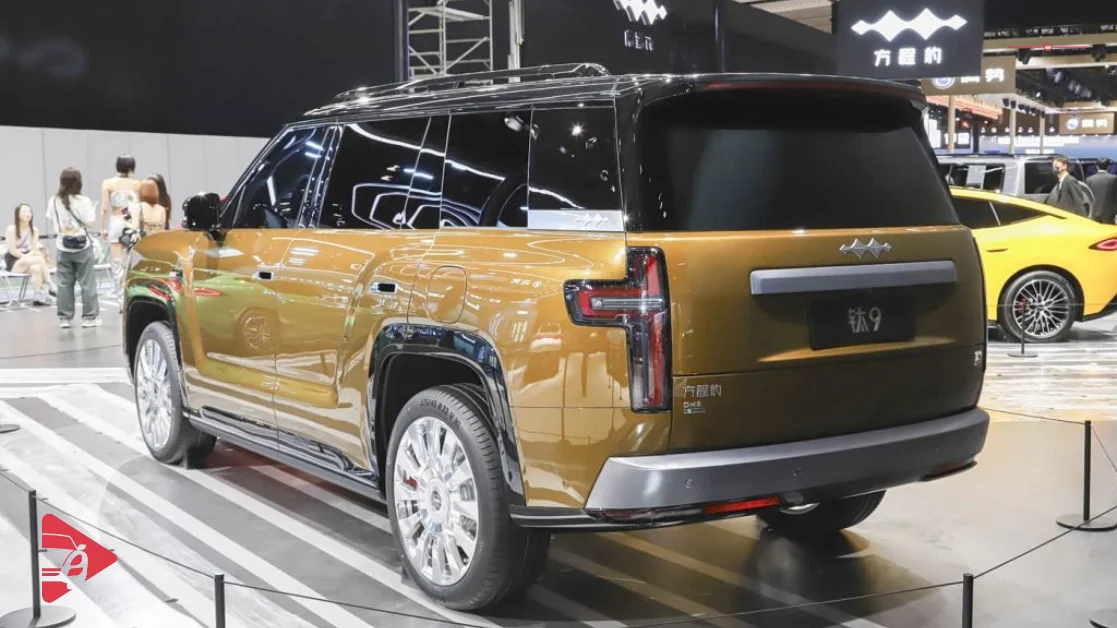
At the rear, the BYD Ti9 adopts a vertical design with lights extending along both sides of the tailgate and an upper spoiler incorporating a high-mounted brake light, along with a hidden rear wiper that preserves the clean appearance.
One of the most practical features is the tailgate split into two sections, upper and lower. This configuration allows flexible access to the luggage area, while the open lower section can be useful during some trips and camping situations.
The vehicle supports towing equipment, including a retractable electric tow hitch and an electrical trailer connector depending on the specification. The towing capacity listed in the registration data is 2,000 kg, expanding the vehicle’s use to include some camping and travel trailers, subject to the legal and technical limits in each market.
BYD Ti9 Dimensions: A Large Three-Row Vehicle
The vehicle measures 5,270 mm in length and 1,999 mm in width, while its height ranges from 1,850 to 1,880 mm depending on the roof equipment. The wheelbase reaches 3,130 mm, one of the key elements enabling the vehicle to offer a spacious family cabin. The following table shows the vehicle’s dimensions:
| Dimension | Measurement |
|---|---|
| Length | 5,270 mm |
| Width | 1,999 mm |
| Standard height | 1,850 mm |
| Height with roof equipment | 1,880 mm |
| Wheelbase | 3,130 mm |
The long wheelbase allows the seats to be distributed across three rows, with the possibility of providing suitable space for the second and third rows. However, exterior dimensions alone are not enough to judge passenger comfort in all rows, as this also depends on seat design, cabin floor height, and available legroom.
Thus, the vehicle’s length and width make parking-assistance systems and rear steering particularly important when maneuvering through narrow streets and multistory parking facilities.
Cabin: Six Seats and a Clear Family-Oriented Focus
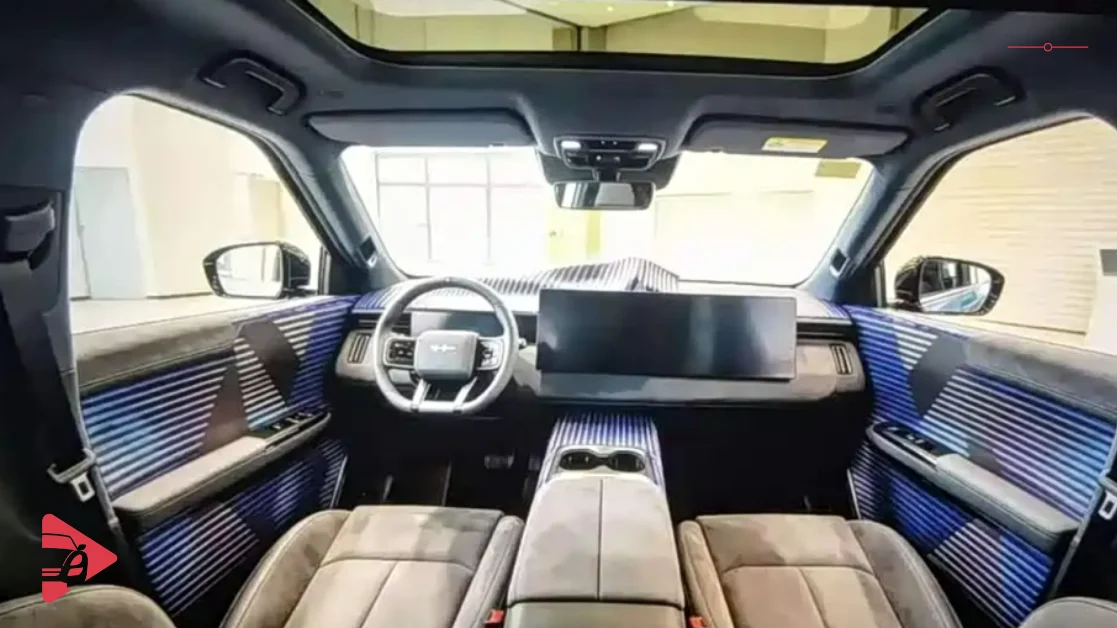
The BYD Ti9 was presented with a six-seat interior arranged in a 2+2+2 configuration, with two seats in each row and two individual seats in the second row.
This layout gives the vehicle a character closer to luxury family transport vehicles, particularly if the second row is designed with separate seats that provide easy access to the rear. The foldable seats also allow the space to be reconfigured between passengers and luggage as needed.
There is a possibility that five-, six-, or seven-seat options may be offered, but the six-seat configuration is the confirmed layout in the displayed version, while details of the other versions will appear in the final trim lineup.
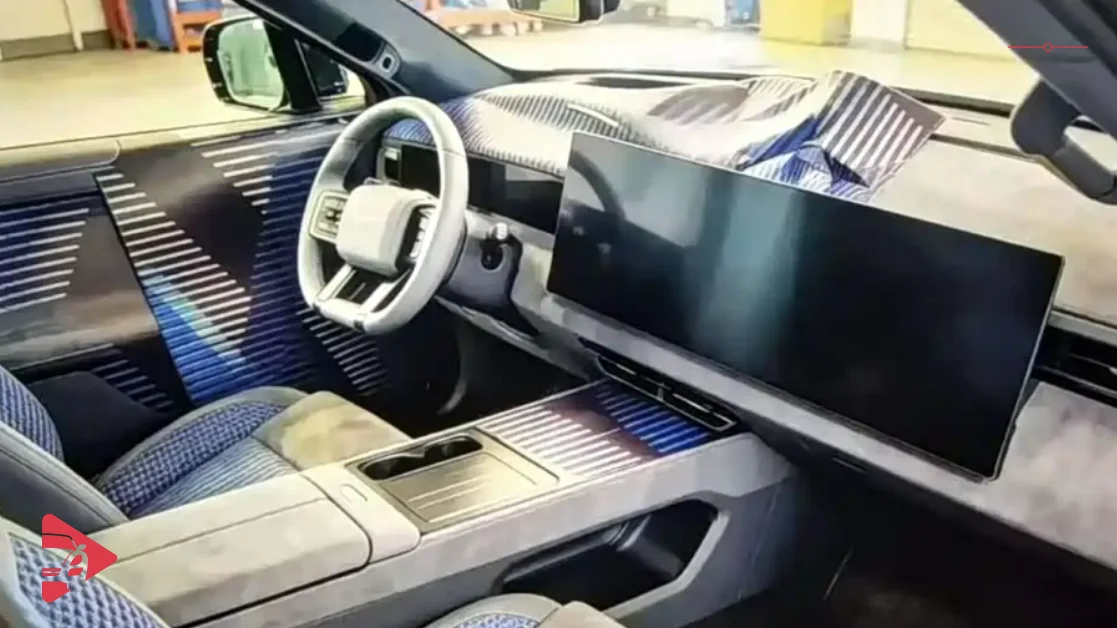
The cabin is expected to benefit from the large dimensions and high roof to provide suitable passenger space, but a final judgment of material quality, comfort, and technological equipment requires reviewing the detailed specifications of each trim.
Not all cabin details have been finalized, including the final screen sizes, seat functions, entertainment systems, and luggage capacity when all three rows are in use.
Powertrain: 1.5-Liter Turbo Engine and Two Electric Motors
The BYD Ti9 uses a plug-in hybrid powertrain combining a 1.5-liter turbocharged gasoline engine with one electric motor on each axle, providing all-wheel drive.
This architecture enables electric driving for daily commutes and reliance on the gasoline engine during long journeys, with energy managed between the powertrain components according to driving conditions and battery charge level.
Gasoline Engine Output
The gasoline engine’s maximum output is 115 kW, equivalent to approximately 156 metric horsepower, while its certified net output is 110 kW, or approximately 150 metric horsepower.
The maximum output and net output must be distinguished because they are different figures in terms of measurement and documentation, and should not necessarily be treated as conflicting values.
Electric Motor Output
Each electric motor produces a maximum of 200 kW, or approximately 272 metric horsepower, while the rated output is 90 kW for the front motor and 70 kW for the rear motor. The following table shows the vehicle’s mechanical specifications:
| Powertrain component | Output |
|---|---|
| 1.5-liter turbo gasoline engine | 115 kW |
| Front electric motor | 200 kW maximum |
| Rear electric motor | 200 kW maximum |
| Combined maximum output of the two electric motors | 400 kW |
The combined maximum output of the two electric motors is equivalent to approximately 544 metric horsepower. However, this figure represents the sum of their stated maximum outputs, not the total certified output of the complete hybrid system.
66.48-kWh Battery and Electric Range of up to 310 km
The BYD Ti9 uses a 66.48-kWh lithium iron phosphate (LFP) battery supplied by FinDreams Battery, a BYD Group subsidiary.
This capacity is considered large for a plug-in hybrid vehicle and provides a significant electric driving range compared with many conventional hybrids that use much smaller batteries.
The claimed electric driving range reaches 310 kilometers according to the WLTC cycle, allowing the vehicle to cover a large portion of daily travel using electricity alone, provided the battery is charged regularly and usage conditions correspond to the test results.
The battery pack weighs approximately 487 kg according to preliminary data. This contributes to the vehicle’s high overall weight, but provides substantial electric capacity in return.
What Does a 310-km Electric Range Mean?
For the user, this figure means that the vehicle is designed to combine an extensive electric driving experience with the flexibility provided by the gasoline engine.
Users who can regularly charge the vehicle at home or at work may be able to complete many daily trips without starting the gasoline engine, while the hybrid system provides additional flexibility during long-distance travel.
However, the actual range may differ from the laboratory figure due to driving speed, payload, temperatures, air-conditioning and heating use, road conditions, and battery condition.
Total Range: More Than 1,600 km
In addition to the electric range, the BYD Ti9 has a total range exceeding 1,600 kilometers when the battery and fuel tank are full.
This figure refers to the combined distance the vehicle can travel using electric energy and gasoline, not to a purely electric range.
This range consists of battery-powered driving under test conditions, followed by the use of fuel to operate the hybrid system when required by usage conditions.
The importance of this figure lies in reducing the need for frequent stops to refuel or recharge during long journeys while retaining the ability to drive electrically during daily use.
Fuel Consumption: What Do We Know So Far?
The consumption rate is 6.40 liters per 100 kilometers. However, this figure should be treated cautiously until the test conditions used to calculate it are known. In plug-in hybrid vehicles, consumption results can vary significantly depending on the battery charge level at the beginning of the test, the regularity of external charging, the distance traveled, and how electricity consumption is calculated.
Therefore, it cannot be assumed that the vehicle will achieve the same rate under all driving conditions. Nor should the consumption figure alone be used to calculate operating costs without knowing fuel and electricity prices and usage patterns.
YunNian-P Ultra Suspension: Focus on Comfort and Control
One of the most notable features associated with the BYD Ti9 is the YunNian-P Ultra intelligent hydraulic suspension system, also known in some contexts as Disus-P-Ultra.
This system aims to improve control over body movement and respond to changes in the road by managing suspension characteristics according to driving conditions and system settings.
This technology is particularly important in a vehicle weighing more than 2.8 tons unladen and measuring 5.27 meters long, as controlling body movement, reducing roll, and improving passenger comfort are essential elements of the driving experience.
The advanced suspension system is expected to help balance comfort and stability, but determining its ability to change the vehicle’s ride height or the extent of performance improvements requires technical data and practical testing.
Rear-Wheel Steering: A Practical Solution for a Vehicle of This Size
The BYD Ti9 features a rear-wheel-steering system that helps improve maneuverability. Its benefit is that at low speeds, the rear wheels can turn in the opposite direction to the front wheels, reducing the turning circle and making it easier to enter parking spaces and turn on narrow streets.
At higher speeds, the rear wheels can be steered in a direction close to that of the front wheels to enhance stability during lane changes.
This feature is especially useful in a long and wide vehicle, but it does not eliminate the need to remain aware of its dimensions when driving in tight spaces or limited-size parking areas.
Is the BYD Ti9 Designed for Off-Road Use?
The boxy design, all-wheel drive, and exterior equipment may suggest that the vehicle is aimed at adventure, but its engineering character indicates a broader focus on family use, travel, and light unpaved roads.
It uses a unibody structure rather than a traditional separate body-on-frame chassis, while its approach angle is 19 degrees and its departure angle is 22 degrees.
The vehicle may be suitable for dirt roads, trips, camping, and some unpaved trails, depending on road conditions, tire equipment, and ground clearance. Severe off-road use requires a different assessment that considers protection for the battery and underbody components, as well as the durability of the powertrain and suspension.
Accordingly, the BYD Ti9 is closer to a large family SUV with versatile capabilities than a direct alternative to every vehicle specialized for off-road use.
LiDAR and Driver-Assistance Systems
The presence of a LiDAR sensor above the windshield indicates that the vehicle is oriented toward advanced driver-assistance technologies. Depending on the trim and market, the equipment may include highway driving assistance, vehicle-surround monitoring, parking assistance, and support for certain urban-driving scenarios.
However, the presence of the sensor does not confirm that all these functions are standard, nor does it alone determine the system’s performance level or ability to operate in different conditions. Driver-assistance systems remain supportive tools and are not a substitute for the driver’s attention and monitoring of the road.
Weight, Wheels, and Towing Capacity
Preliminary data shows that the BYD Ti9’s curb weight is 2,865 or 2,965 kg depending on the trim and equipment, while the maximum gross weight reaches 3,495 kg.
This weight is related to the body size, large battery, all-wheel-drive system, electric components, and three-row cabin.
This highlights the importance of evaluating the braking and suspension systems, body-motion control, and energy consumption during practical tests, especially when the vehicle is loaded with passengers and luggage.
The wheels are available in 21- and 22-inch sizes. Registration documents reveal tire options including 255/50 R21, as well as 22-inch options including 255/45 R22 at the front and 275/45 R22 at the rear.
The vehicle also supports a towing capacity of up to 2,000 kg, expanding its uses to suitable trailers within approved limits. Nevertheless, the final version’s specifications and licensing requirements in the market where the vehicle will be sold must be verified.
Competitors: A Battle in the Large Family SUV Segment
The BYD Ti9 enters a highly competitive Chinese market containing large vehicles competing on spaciousness, premium equipment, driver-assistance systems, and long range.
Models that can be compared with it in terms of their general segment or target customers include:
- Li Auto L9.
- AITO M9.
- Denza N9.
- Lynk & Co 900.
- Other large SUVs using plug-in hybrid or extended-range electric systems.
These vehicles differ in powertrain philosophy, equipment, luxury levels, and prices, so they cannot be considered technically identical.
The BYD Ti9’s preliminary strengths include its 66.48-kWh battery, claimed electric range of 310 kilometers according to WLTC, rear-wheel steering, advanced suspension, and long wheelbase.
However, its actual competitive position will depend on the final price, standard equipment level, charging speed, hybrid-system performance, cabin quality, and availability of after-sales services in different markets.
BYD Ti9 Launch Date and Price
After appearing in Chinese registration documents and being presented globally during the 2026 Chengdu International Auto Show, the Ti9 became one of the new models anticipated as part of BYD’s strategy.
However, appearing at an international exhibition does not necessarily mean that sales or deliveries will begin at the same time. Until the official price, trim lineup, and delivery schedule are announced, any circulating prices or dates should be treated as unconfirmed unless issued by the company or a reliable source.
Nor can the vehicle’s arrival in the Gulf, Saudi Arabia, or other global markets be assumed solely because it appeared in China; this requires a separate announcement regarding export plans, local specifications, warranty, and maintenance services.
The key details that will determine the vehicle’s final position include:
- Official prices and available trims.
- The certified total output of the hybrid system.
- Torque and acceleration from zero to 100 km/h.
- Maximum charging capacity and charging time.
- Fuel-tank capacity and the method used to measure total range.
- Final cabin equipment and safety systems.
- Details of the driver-assistance systems.
- Export plans for global markets.
Frequently Asked Questions
What type of vehicle is the BYD Ti9?
The BYD Ti9 is a large family plug-in hybrid SUV from the Fang Cheng Bao brand, owned by BYD Group.
How many seats does the BYD Ti9 have?
The BYD Ti9 was presented with six seats distributed across three rows in a 2+2+2 configuration. Other potential options require final confirmation within the commercial trim lineup.
What is its electric range?
The BYD Ti9 has an electric range of up to 310 kilometers according to the WLTC cycle.
What is the Ti9’s total range?
The total range exceeds 1,600 kilometers when combining a fully charged battery with a full fuel tank, according to the applicable test conditions.
What is the battery capacity and type?
The BYD Ti9’s battery capacity is approximately 66.48 kWh, and it is a lithium iron phosphate LFP battery.
What is the output of the electric motors?
Each electric motor produces a maximum of 200 kW, while the combined maximum output of the two motors is 400 kW, equivalent to approximately 544 metric horsepower.
What is the gasoline engine output?
The BYD Ti9’s gasoline engine has a maximum output of 115 kW, equivalent to approximately 156 metric horsepower.
Does the BYD Ti9 have all-wheel drive?
Yes. The BYD Ti9 uses one front electric motor and one rear electric motor to provide all-wheel drive.
Is the BYD Ti9 suitable for off-road use?
The BYD Ti9 can handle unpaved roads and light trips depending on road conditions and equipment, but it is closer to a large versatile family vehicle than a vehicle specialized for severe off-road trails.
What is its trailer-towing capacity?
The capacity reaches 2,000 kg, depending on the equipment and applicable approvals.
What is the top speed?
The BYD Ti9’s registered top speed is 220 km/h.
How much does the BYD Ti9 cost?
The official price was not announced during the initial unveiling and appearance at the 2026 Chengdu Auto Show.
When will the BYD Ti9 arrive in Saudi Arabia or the Gulf?
The launch date in these markets has not been finalized and requires an official announcement regarding export and distribution plans.
Is the BYD Ti9 fully electric?
No. It is a plug-in hybrid that combines a battery, electric motors, and a gasoline engine; it is not a fully electric vehicle.
In Summary
The BYD Ti9 reveals a clear direction toward developing large family SUVs that combine spaciousness, advanced technologies, and increasing reliance on electric power. It does not merely offer a large body and three rows of seats, but also adds a large battery, all-wheel drive, rear-wheel steering, and intelligent hydraulic suspension.
Its 66.48-kWh battery and electric range of up to 310 kilometers according to WLTC are among the vehicle’s most important features, particularly for users who want to reduce their reliance on gasoline during daily travel without giving up the flexibility of long-distance journeys.
Nevertheless, the final judgment remains linked to the official price, certified total output, charging speed, cabin quality, and the hybrid system’s real-world efficiency. To find out the vehicle’s price when it reaches the Saudi market, please visit CarsVid and follow car prices regularly.